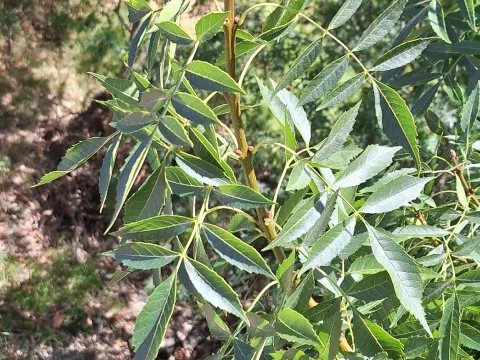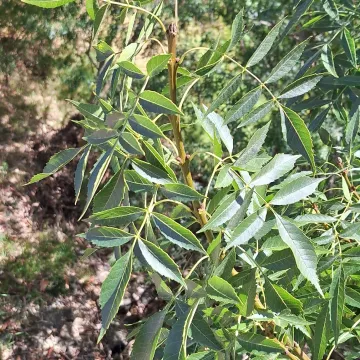
Syrian narrow-leaved ash
Fraxinus angustifolia Vahl subsp. syriaca (Boiss.) Yalt.
Description
The Syrian narrow-leaved ash (Fraxinus angustifolia subsp. syriaca) is a deciduous tree belonging to the family Oleaceae. As an agricultural and forestry crop, this subspecies is recognized for its exceptional resilience in arid and semi-arid environments, making it a critical species for reforestation and shelterbelt programs in dry regions.
Originating from the Middle East and surrounding regions, this tree is natively distributed across varied landscapes, from river banks to mountainous slopes. Its evolutionary development has equipped it with deep root systems capable of reaching underground water tables, allowing it to thrive where other species might fail due to lack of precipitation.
Botanically, the tree is distinct due to its narrow, elongated leaflets and a greyish bark that develops deep furrows with age. Its growth habit is characterized by a sturdy, upright trunk and a relatively light canopy, which allows filtered sunlight to reach the ground, preventing excessive heat accumulation at the base of the tree.
Regarding cultivation, the species demands well-drained, nutrient-rich soils but shows remarkable adaptability to various soil structures. Optimal agrotechnical practices involve providing irrigation during the establishment phase and applying balanced fertilization to encourage robust growth. It is relatively easy to propagate through seeds, provided they undergo proper stratification to break dormancy.
The economic value of this tree is significant, ranging from the production of high-quality, durable timber for tools and furniture to its environmental role in carbon sequestration. Growers must remain vigilant against pests such as the emerald ash borer and diseases like ash dieback, which necessitate rigorous monitoring and the use of integrated pest management strategies.
Photo gallery