
Description
Fuirena squarrosa, commonly known as the purple tufted-spike rush or simply squarrose sedge, is a perennial herbaceous plant belonging to the Cyperaceae family. It is recognized for its unique, bristly-looking flower heads and its preference for moist, sandy environments. This species plays a significant role in maintaining the health of wetland ecosystems.
Native to North America, primarily found in the eastern United States, this sedge thrives in acidic, wet soils. Its range spans from coastal plains to inland bogs and swampy marshes. The plant has evolved to handle fluctuating water levels, making it a robust colonizer of disturbed or natural wetland habitats.
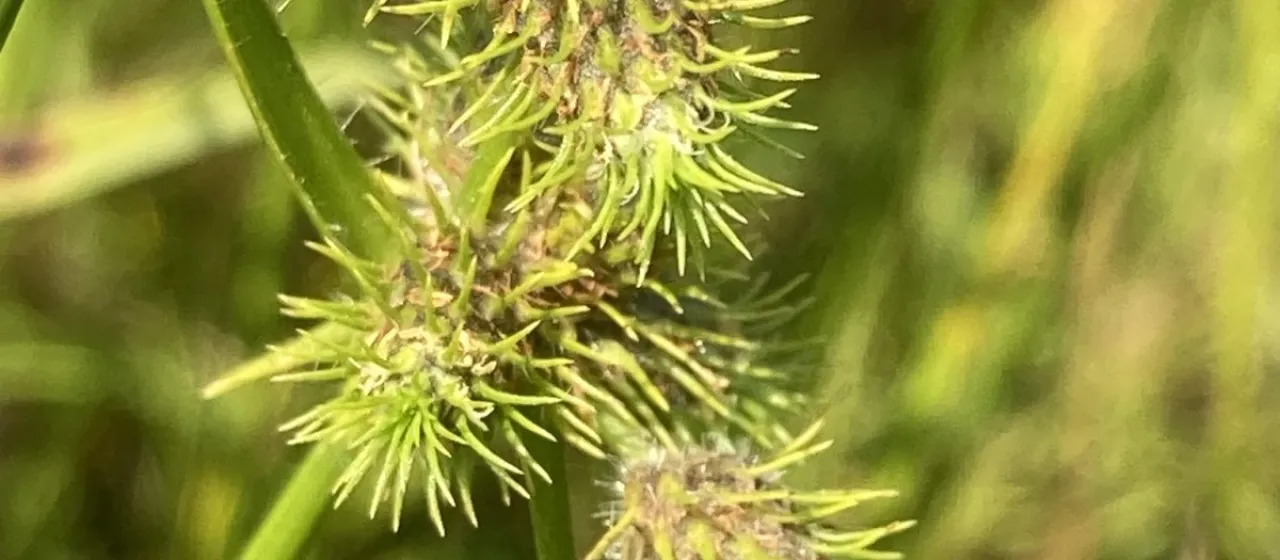
Botanically, it features narrow, linear leaves and distinct inflorescences composed of several spikelets clustered at the stem tip. These spikelets are covered with conspicuous, spreading scales that give the plant its characteristic rough or "tufted" appearance. The root system is stoloniferous, allowing the plant to spread horizontally and stabilize loose, wet substrate.
Cultivation requirements for Fuirena squarrosa are specific, demanding high soil moisture and acidic conditions. It is not a drought-tolerant crop and requires consistent hydration to thrive. In agricultural or restoration settings, managing soil pH and preventing competing aggressive vegetation is essential for establishment.
- Requires full sun to partial shade for optimal growth.
- Thrives in nutrient-poor but moist sandy soils.
- Can be used for phytoremediation in wetland buffer zones.
- Susceptible to water-borne fungal pathogens if stagnant.
While not a traditional food crop, it serves important ecological functions, including erosion control and habitat provisioning. Pests are generally minimal but can include leaf-eating insects and, in specific cases, root-feeding invertebrates that exploit the plant's succulent, water-saturated tissues.