
Description
Fumana laevis is a perennial subshrub belonging to the Cistaceae family. This species is highly regarded for its ability to thrive in harsh, nutrient-poor environments, making it a unique subject for agricultural and ecological studies focused on arid-land vegetation.
The plant originates from Mediterranean climates and steppe regions, where it colonizes rocky outcrops, limestone crevices, and sandy soils. Its natural distribution is limited to areas with high light intensity and long periods of water scarcity, which the plant manages through specialized physiological mechanisms.
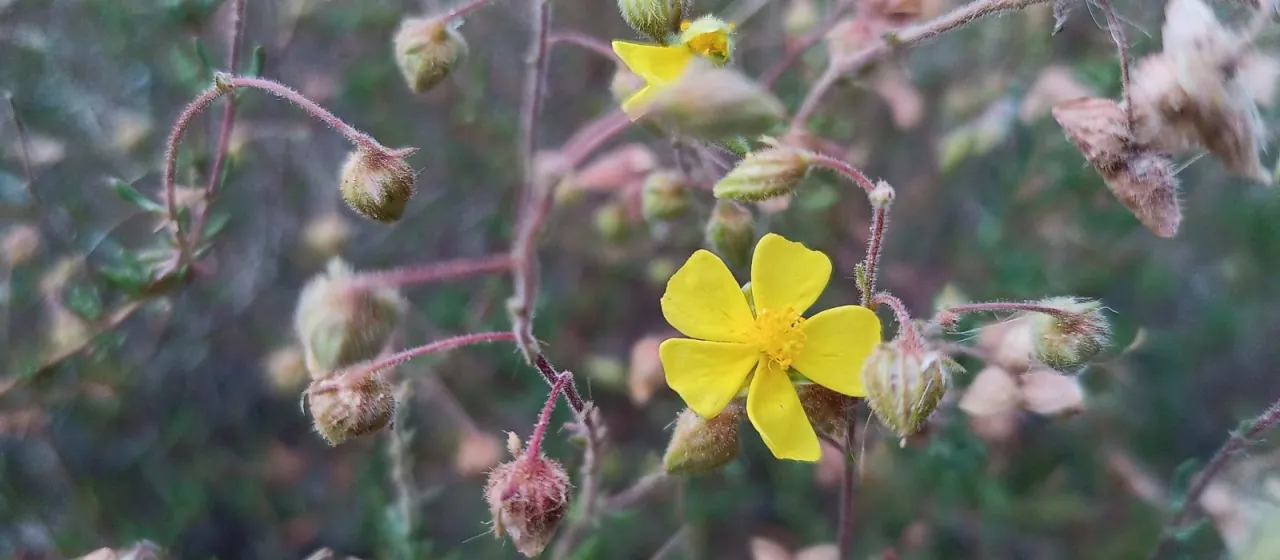
Botanically, Fumana laevis exhibits a woody stem base with narrow, evergreen, or semi-evergreen foliage. Its bright yellow flowers, typical of the Cistaceae family, contribute to its aesthetic value. The plant is adapted to perform photosynthesis efficiently while minimizing water loss, which is essential for survival in dry, open habitats.
Cultivation requirements for this species are focused on soil drainage and thermal stability. In an agricultural or horticultural setting, it is critical to provide a substrate that mimics its natural rocky habitat. Essential care practices include:
- Ensuring high soil permeability to prevent root rot.
- Avoiding excessive fertilization to maintain compact growth.
- Providing full sun exposure to stimulate flowering.
- Limited irrigation, specifically in mature stands.
In terms of хозяйственного (economic) use, the plant is primarily utilized in xeriscaping and soil erosion control projects. While it is rarely affected by common agricultural pests, the primary risks include fungal infections associated with high humidity and stagnant water, reinforcing the need for professional site selection during planting.