
Description
Thyme-leaf rockrose (Fumana procumbens) is a perennial subshrub species belonging to the Cistaceae family. It is a low-growing, mat-forming plant specifically adapted to dry, stony environments. While not a conventional crop in industrial agriculture, it is recognized for its unique ability to thrive in harsh conditions where standard vegetation struggles to survive.
The native range of this species extends across Europe, the Mediterranean region, and parts of Western Asia. It typically inhabits lime-rich soils, limestone outcrops, and degraded grasslands. Its natural distribution demonstrates a high level of resilience to environmental stressors, making it an excellent candidate for xeriscaping and ecological restoration projects.
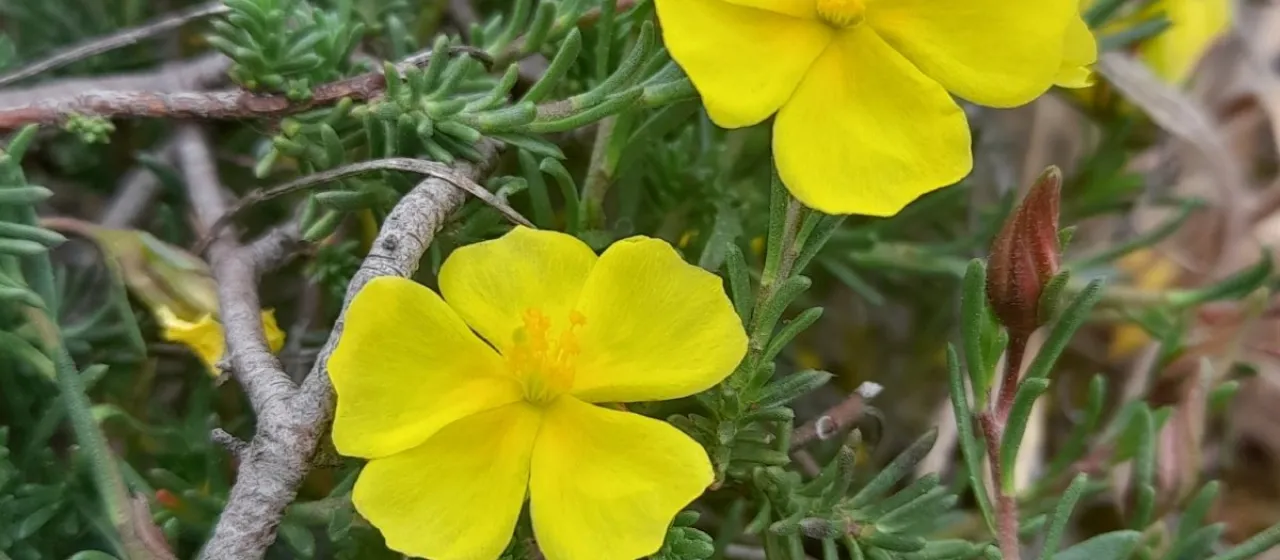
Botanically, Fumana procumbens is distinguished by its small, narrow leaves and bright yellow, five-petaled flowers. The plant typically spreads along the ground, with upright flowering stems. It possesses a woody base and a deep taproot system, which allows it to access mineral-rich water sources even during prolonged droughts.
Agrotechnical requirements for the successful cultivation of Fumana procumbens include extreme drainage and full solar exposure. It is highly sensitive to soil compaction and waterlogging, which often result in root rot. The ideal growing medium is a gravelly, alkaline soil that mimics the natural steppe environment. Fertilizer application should be avoided, as the plant is adapted to nutrient-poor substrates.
In terms of хозяйственного (economic) use, the plant is valued for slope stabilization and rock garden design. Diseases primarily manifest as fungal infections of the stems and roots caused by excessive humidity. Pests are rarely a significant concern, although care should be taken to ensure proper airflow to prevent mildew or mite infestations in dense plantings. It serves as a valuable resource for maintaining biodiversity in dry, marginal landscapes.