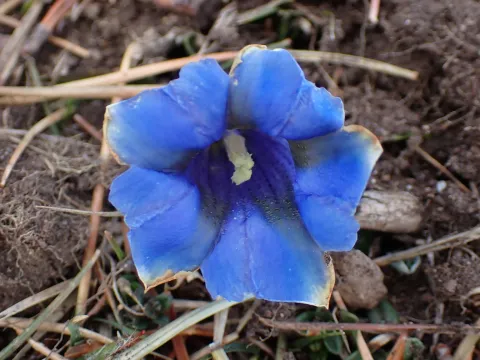
Stemless gentian
Gentiana acaulis L.
Description
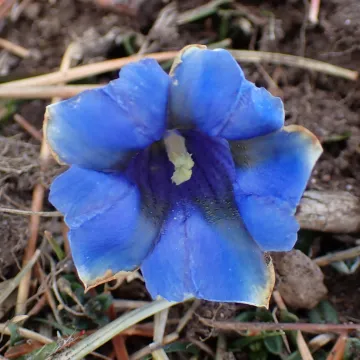
The stemless gentian (lat. Gentiana acaulis L.) is a perennial herbaceous plant belonging to the Gentianaceae family. It is a highly valued alpine species, known for its large, deep-blue trumpet-shaped flowers that bloom in late spring and early summer, creating a dramatic visual impact in rock gardens.
The native habitat of this plant includes the mountainous regions of Central and Southern Europe, such as the Alps and the Pyrenees. Due to its origin, the species is perfectly adapted to cool, high-altitude climates, rocky terrains, and well-drained soils, which are critical for its successful cultivation in garden environments.
Botanically, it is characterized by a basal rosette of leaves and the absence of a visible stem, with flowers sitting almost directly on the foliage. The roots are relatively shallow but sensitive to disturbance. The deep blue color of the petals is a distinctive feature of the genus, often considered a hallmark of high-quality alpine landscaping.
Successful cultivation requires specific environmental conditions, primarily gritty or sandy soils with excellent drainage. Stemless gentian thrives in neutral to slightly acidic soils and dislikes waterlogged conditions which lead to root rot. Partial shade in hotter climates is beneficial to prevent soil overheating, which the plant generally avoids in its natural alpine home.
In terms of plant health, the species is relatively robust but can be targeted by slugs and snails that feed on the foliage. Proper sanitation, such as removing surrounding debris and ensuring good airflow, helps prevent fungal issues. Regular mulching with gravel helps keep the crown dry and protects the plant from moisture-related decay.
- Watering: moderate, ensuring soil remains moist but not sodden.
- Propagation: division of established clumps or seeds.
- Soil type: well-drained, nutrient-poor or medium-fertile soil.
- Landscaping: ideal for rockeries, troughs, and alpine beds.
Photo gallery