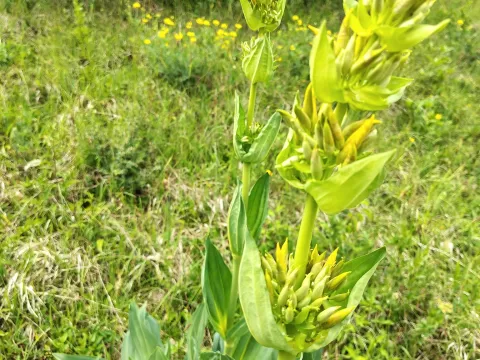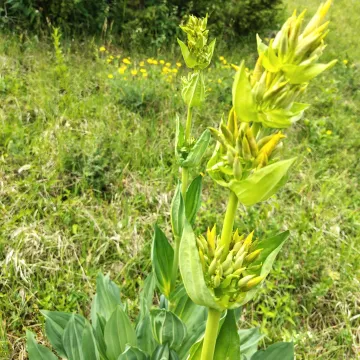
Great yellow gentian
Gentiana lutea L.
Description
Great yellow gentian (Gentiana lutea L.) is a long-lived herbaceous perennial plant belonging to the Gentianaceae family. It is highly esteemed in the agricultural and pharmaceutical sectors for its thick, bitter roots, which serve as a primary ingredient in digestive tonics, herbal medicines, and premium alcoholic bitters.
The native habitat of this species is centered in the mountainous regions of Central and Southern Europe. As a cultivated crop, it thrives in cool, high-altitude climates with consistent soil moisture. Given its slow growth rate, starting from seed to harvest usually requires several years of careful field management and stable environmental conditions.
Botanically, the plant features a robust, deep-penetrating taproot and an erect stem that can grow up to 1.5 meters tall. Its large, broad, opposite leaves provide a dense rosette, while the vivid yellow star-shaped flowers appear in whorls. It is a slow-maturing species, often taking nearly a decade to reach its full flowering potential and peak chemical potency.
Success in cultivating Gentiana lutea depends on site selection. The crop requires deep, well-drained, lime-rich soils with high organic matter content. Agronomic practices must prioritize long-term field planning, as the plants are sensitive to transplanting. Weed control is critical during the first three years of growth, as the seedlings are extremely slow to establish themselves.
The economic value of this crop is derived from its diverse applications:
- Extraction of amaroids for pharmaceutical digestive stimulants.
- Flavoring agents in the production of high-end aperitifs and liqueurs.
- Ornamental horticulture in alpine and rock gardens.
The crop is susceptible to certain agricultural pests and diseases, particularly root rots triggered by soil compaction or poor drainage. Monitoring for aphids during the growing season and maintaining optimal soil aeration are essential components of a integrated pest management strategy to ensure a healthy and high-yielding harvest of the roots.
Photo gallery