Small-flowered crane's-bill
Geranium pusillum L.
Description
Small-flowered crane's-bill (Geranium pusillum L.) is an annual or biennial herbaceous plant belonging to the Geraniaceae family. While often categorized as a weed in agricultural landscapes, it plays a specific role in ecological biodiversity and is a common species found in disturbed soils across temperate regions.
The species is native to Europe and Western Asia but has become naturalized across North America and parts of the Southern Hemisphere. It typically thrives in meadows, fields, roadsides, and gardens, showing a preference for open, sunlit areas where it can establish quickly due to its effective seed dispersal mechanisms.
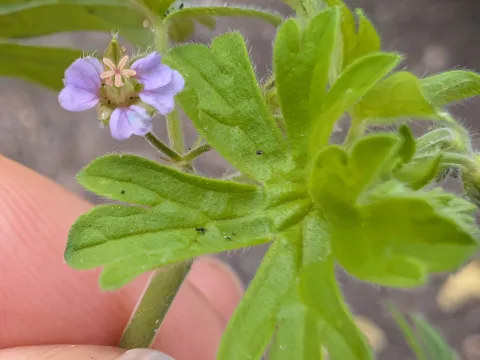
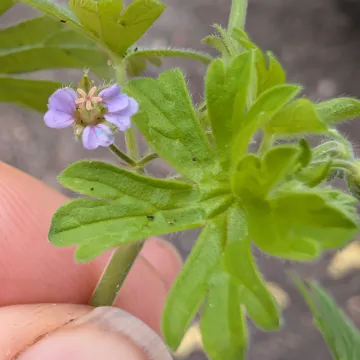
Botanically, the plant is characterized by its prostrate or ascending stems covered in fine, soft hairs. The leaves are circular in outline and palmately divided into several lobes. It produces small, pale violet flowers that bloom throughout the summer. The fruit is a distinctive schizocarp that splits into five mericarps at maturity, facilitating the spread of its seeds.
Regarding cultivation requirements, Geranium pusillum prefers well-drained, nutrient-rich soils and avoids excessive moisture. It is quite competitive in low-fertility soils. In professional agriculture, management practices focus on integrated weed control, including crop rotation, harrowing, and the use of selective herbicides to prevent the depletion of soil nutrients by this uninvited guest.
Common issues affecting this plant include fungal infections like rust and powdery mildew, which can stunt its growth under humid conditions. Pests such as aphids and specialized weevils are often observed feeding on the vegetative parts.
- Mechanical cultivation
- Chemical control
- Proper soil drainage
- Regular field monitoring
Photo gallery