Wlassov's cranesbill
Geranium wlassovianum Fisch. ex Link
Description
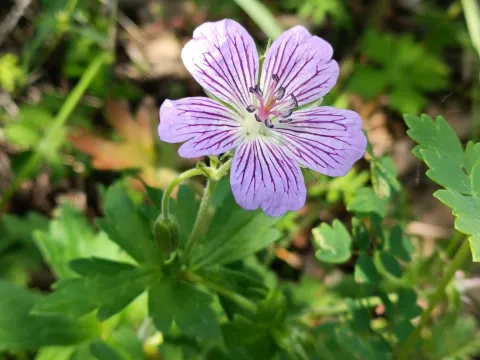
Wlassov's cranesbill (Geranium wlassovianum) is a perennial herbaceous plant belonging to the Geraniaceae family. This species is highly valued in horticulture for its ornamental foliage, which develops deep reddish tints in autumn, and its long-lasting, vibrant purple-violet flowers.
The plant originates from East Asia, encompassing regions such as the Russian Far East, Mongolia, China, and the Korean Peninsula. It typically inhabits meadows and forest edges in the wild, which makes it well-adapted to varied soil conditions and temperate climate zones.
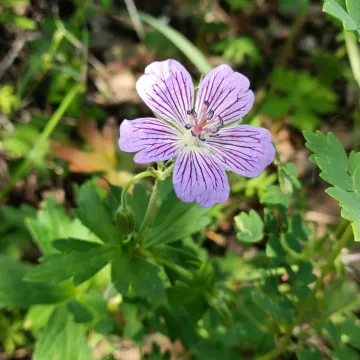
Botanically, it forms dense, low-growing mounds usually reaching 30 to 50 centimeters in height. The foliage is deeply lobed, and the flowers feature distinct dark veins, which provide a striking aesthetic effect during the blooming season in mid-to-late summer.
For successful cultivation, Wlassov's cranesbill requires fertile, moist, and well-draining soil. It thrives in full sun but can tolerate partial shade. Proper maintenance involves regular watering during dry spells and removing spent flower stalks to encourage potential repeat blooms and maintain a tidy appearance.
In landscaping, this cranesbill is ideal for naturalistic plantings, mixed borders, and as an edge plant. It is generally resistant to pests and diseases, although gardeners should watch for signs of powdery mildew in areas with poor air circulation or excessive soil moisture.
- Highly winter-hardy and easy to establish in garden beds.
- Produces high-quality foliage with significant autumn color.
- Versatile plant for various landscape garden styles.
- Low maintenance requirements compared to other perennials.
Photo gallery