Peruvian verbena
Glandularia peruviana (L.) Small
Description
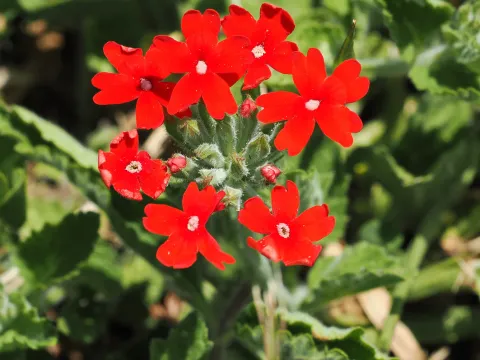
Peruvian verbena (Glandularia peruviana) is a perennial herb belonging to the Verbenaceae family. It is recognized for its trailing growth habit and intense floral display, making it a popular choice for gardeners and landscapers looking for effective ground cover solutions that provide continuous color throughout the warmer months.
Native to the regions of South America, particularly Peru, the plant thrives in environments that mimic its natural habitat: abundant sunlight and moderate moisture. While it is a perennial in warmer climatic zones, in colder regions, it is frequently treated as an annual or overwintered indoors to protect the root system from freezing temperatures.
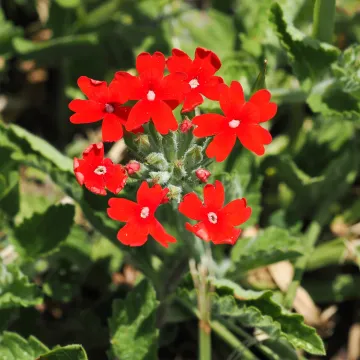
The botanical structure of the plant features creeping stems that readily take root when in contact with the soil. Its leaves are usually oblong and textured, often with serrated margins. The inflorescences appear in dense, flattened clusters, showcasing vibrant hues of red, purple, and white, which are highly attractive to pollinators such as butterflies and bees.
Agricultural requirements for Glandularia peruviana center on providing well-draining soil and a location with full sun exposure. It is crucial to prevent waterlogging, as the species is susceptible to root rot in poorly drained substrates. Soil fertility should be maintained through balanced fertilization to support its rapid growth rate and prolific blooming cycles.
The primary use of this plant is in ornamental horticulture, particularly for rock gardens, hanging baskets, and as a low-maintenance ground cover. Common pests include aphids and spider mites, while powdery mildew is the most frequent disease. Effective management involves maintaining proper spacing for air circulation and applying integrated pest management strategies to keep the plants vigorous.
- Ensure at least 6 hours of direct sunlight per day.
- Apply a light layer of mulch to conserve moisture without soaking stems.
- Prune back stems mid-season to encourage denser growth and new blooms.
- Monitor for signs of spider mites, especially in dry, hot weather conditions.
Photo gallery