Otaheite gooseberry
Phyllanthus acidus (L.) Skeels
Description
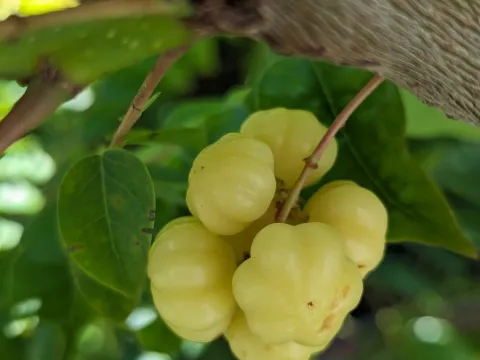
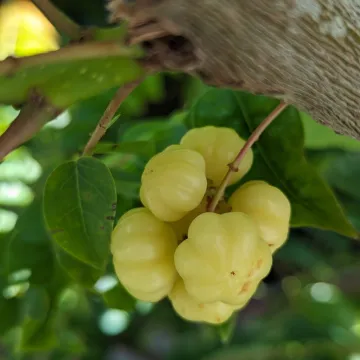
The Otaheite gooseberry (Phyllanthus acidus) is a significant tropical fruit tree belonging to the Phyllanthaceae family. Despite its common name, it is not related to the temperate gooseberry (Ribes), but rather a distinct species known for its heavily ribbed, acidic fruits that are widely consumed in tropical regions.
Native to Madagascar and parts of Southeast Asia, the tree has been naturalized across various tropical and subtropical regions worldwide, including the Caribbean, Central America, and South America. It thrives in humid environments and is often grown in home gardens or small-scale commercial plantations for its nutritious, sour fruits.
Botanically, it is a deciduous or evergreen tree reaching up to 9 meters in height. A unique characteristic is its cauliflory, where flowers and subsequent fruit clusters develop directly on the thick, main branches or the trunk itself. The fruits turn a pale yellow or whitish color when mature and contain a single, hard central stone.
Regarding soil and climate, the plant prefers warm, humid weather and is tolerant of a wide range of soil types, including sandy, acidic, or even limestone soils. It is quite drought-tolerant once established but performs best when provided with consistent moisture and protection from strong, damaging winds that can cause fruit drop.
Commercially, the Otaheite gooseberry is valued for its culinary versatility. It is used in jams, jellies, pickles, and as a flavoring agent in traditional recipes. Traditional medicine also utilizes the roots, seeds, and leaves for their diverse pharmacological properties, including antimicrobial and anti-inflammatory activities.
- Tropical climate requirement
- High vitamin C content
- Propagation via seeds or grafting
- Susceptibility to scale insects
Photo gallery