Indian gooseberry
Phyllanthus emblica L.
Description
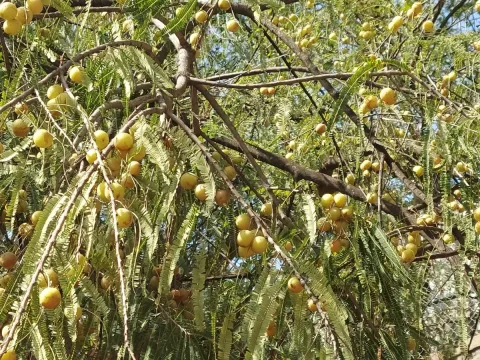
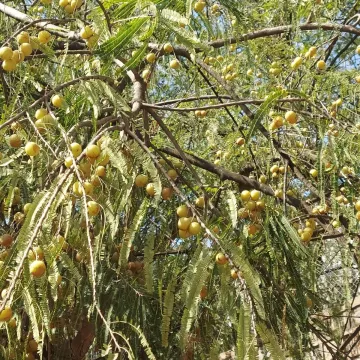
Indian gooseberry (Phyllanthus emblica L.), widely known as Amla, is a deciduous tree belonging to the family Phyllanthaceae. It is highly esteemed in agricultural and botanical circles for its nutrient-dense fruits and adaptability to tropical climates. The tree is characterized by its light, feathery foliage and smooth, greenish-grey bark that naturally peels away in strips.
Native to tropical and subtropical regions of Asia, specifically India, China, and Southeast Asia, the Amla tree thrives in warm, humid environments. It is remarkably hardy, surviving in various climatic conditions, though it performs best in regions with distinct wet and dry seasons. It is widely cultivated in orchards where it can receive full sunlight, which is essential for fruit development.
The botanical structure of the tree is unique; the small, round, greenish-yellow fruits are actually capsules that are fleshy and edible. These fruits possess a distinct acidic and astringent taste and are celebrated globally for their extremely high concentration of vitamin C and antioxidants. Mature trees can reach significant heights, requiring strategic pruning to maintain manageable levels for efficient harvesting.
Agrotechnical requirements for Amla include well-drained, fertile soil, ideally sandy loam with a slightly acidic to neutral pH level. While the tree is drought-tolerant once established, young saplings require consistent irrigation to develop a robust root system. Regular pruning is necessary to remove dead wood and encourage the growth of fruiting branches, ensuring a higher yield per hectare.
The primary economic value of Indian gooseberry lies in its diverse applications. It is a cornerstone ingredient in traditional herbal medicine, dietary supplements, and modern cosmetic products. While generally robust, the plant can be susceptible to pests such as gall caterpillars and diseases like rust or leaf spot. Effective integrated pest management (IPM) practices, including sanitation and selective chemical control, are vital to maintain plantation health and productivity.
Photo gallery