
Description
The white sunrose (Helianthemum apenninum) is a perennial subshrub belonging to the Cistaceae family. It is highly valued in horticulture for its prostrate growth habit and its ability to produce a profusion of delicate white flowers during the late spring and early summer seasons.
The species originates from the Mediterranean basin and Southern Europe, where it thrives in rocky, arid habitats. Its native distribution reflects its natural adaptation to harsh, sun-drenched environments where soil nutrition may be limited, but drainage is excellent.
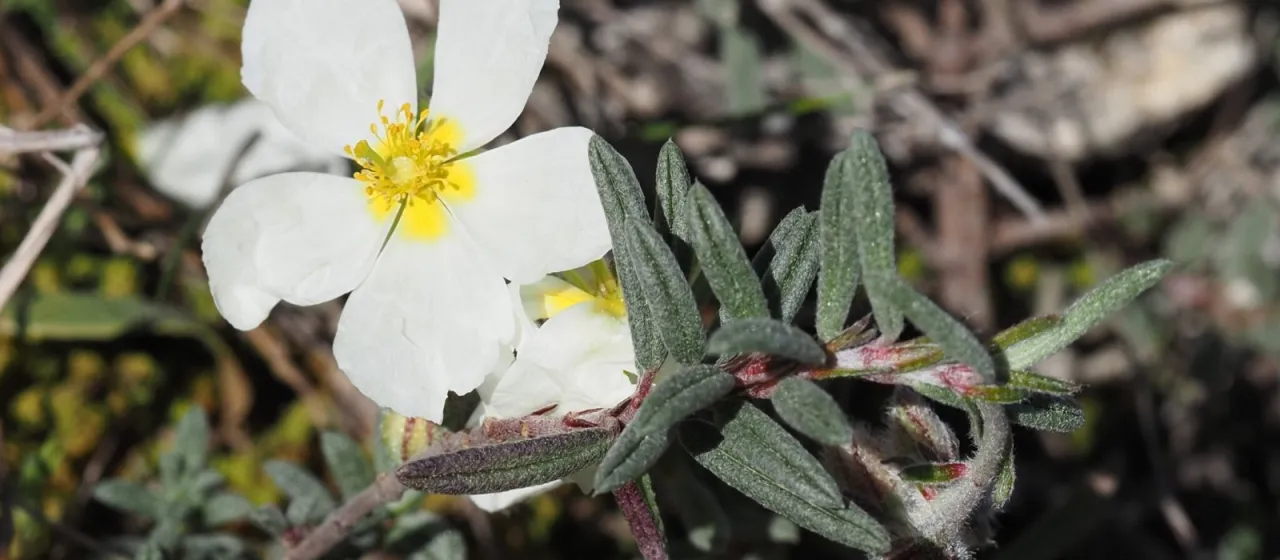
Morphologically, the plant is characterized by its woody base and lanceolate, silvery-green leaves covered with fine hairs, which help minimize water loss. The flowers are typically white with prominent yellow stamens, creating a striking contrast against the foliage, and are highly attractive to local pollinators.
Regarding agrotechnical requirements, the white sunrose demands full sun exposure and well-draining, calcareous soils. It is intolerant of heavy, waterlogged conditions, which frequently lead to root rot. Successful cultivation requires careful site selection, preferably on a slope or a raised bed where water drains away rapidly.
Economically and aesthetically, this plant is a staple in xeriscaping and rock gardens. It serves as an excellent ground cover, effectively suppressing weeds while requiring very little maintenance, such as occasional light pruning to encourage denser growth and prevent the plant from becoming excessively leggy.
- Light requirements: Full sun (at least 6-8 hours daily).
- Soil type: Poor, stony, and alkaline (calcareous).
- Watering: Minimal; avoid deep irrigation during dormant periods.
- Common pests: Aphids during the peak growing season.
- Disease prevention: Ensure excellent air circulation and drainage to avoid mildew.