
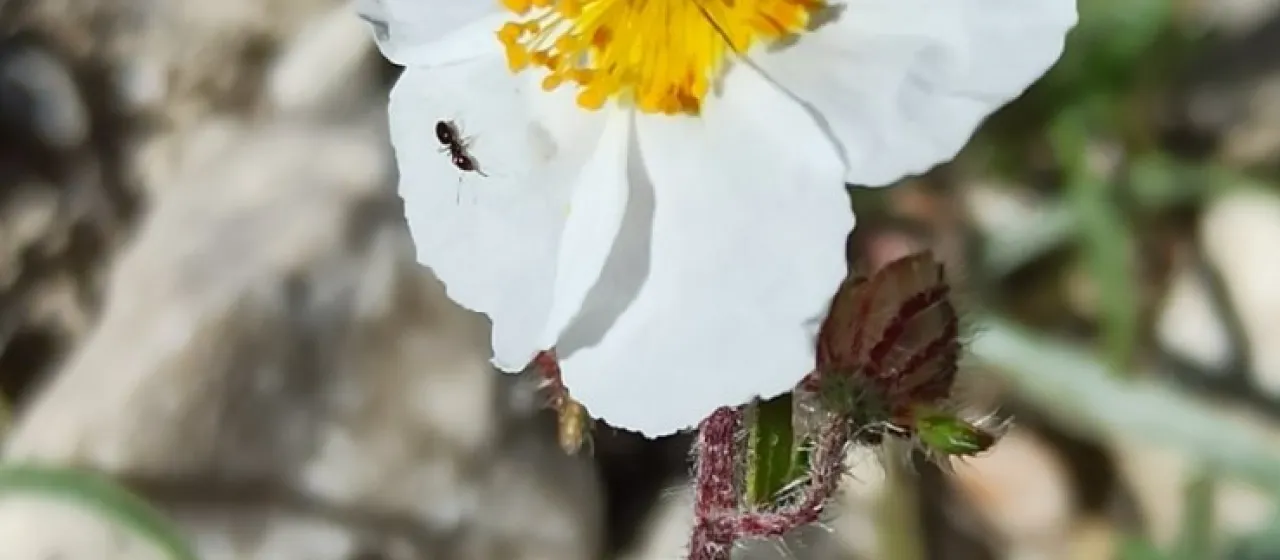
Description
Helianthemum asperum is a perennial subshrub belonging to the family Cistaceae, commonly known as the rock rose family. While not a conventional agricultural crop for food production, it holds significant value in horticulture, particularly for arid regions where water conservation and landscape stability are paramount.
Originating primarily from the Mediterranean basin and arid European territories, this species has evolved to thrive in environments where most traditional vegetation fails. Its natural distribution is linked to rocky substrates, limestone outcrops, and degraded soils, where its survival strategy focuses on high transpiration efficiency and heat tolerance.
Botanically, the plant is characterized by its rough, pubescent leaves and stems, which provide a protective barrier against intense sunlight and desiccation. The flowers are typically yellow, exhibiting a heliotropic nature where blooms open predominantly in direct sunlight. The growth habit is low-spreading, making it an excellent candidate for erosion control on slopes.
Cultivation requires strict adherence to soil drainage standards. The species demands full sun exposure to maintain structural integrity and flowering potential. The ideal soil profile should be gritty, porous, and lean, mimicking the natural rocky slopes of its origin. Over-fertilization should be strictly avoided as it leads to rank growth and reduced hardiness.
Regarding pest and disease management, the primary concern is fungal susceptibility caused by high humidity or stagnant moisture in the root zone. Root rot is the most common cause of failure in cultivation. In healthy, well-drained gardens, Helianthemum asperum is virtually free of serious pests, making it a sustainable choice for xeriscaping and sustainable landscape design.