
Description
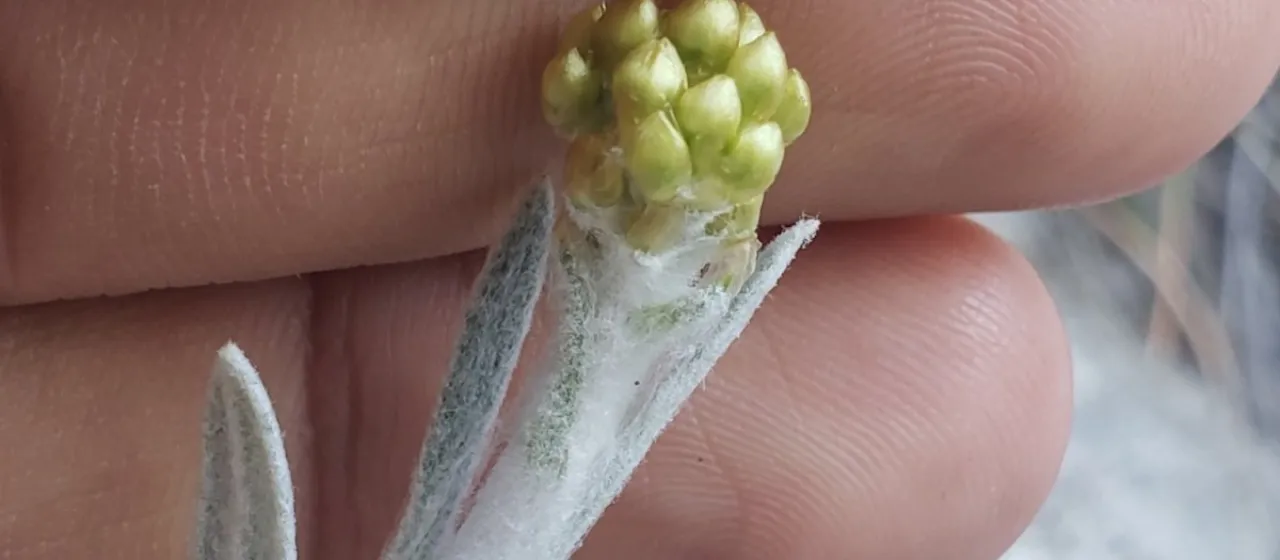
Thick-leaved everlasting (lat. Helichrysum crassifolium) is a perennial herbaceous plant belonging to the Asteraceae family. It is recognized for its unique appearance, characterized by fleshy leaves and a dense white tomentose coating, which makes it a valuable species for dry garden designs and specialized horticultural production.
The plant is native to the Mediterranean region, typically found in coastal areas, sandy dunes, and rocky terrains. Its evolutionary background in these habitats has resulted in a high degree of resilience to salt spray, intense sunlight, and limited water availability, making it an ideal candidate for xeriscaping.
Botanically, the plant is distinguished by its succulent-like leaves that retain moisture effectively. The structure of the foliage is protected by fine, silver-white hairs. The reproductive cycle results in clusters of vibrant yellow flower heads that, as the common name suggests, retain their color and structure for a long period even after harvesting.
Agronomic requirements are focused on soil structure and light. To cultivate Helichrysum crassifolium successfully, growers must ensure a sandy, well-draining soil mix with a neutral or slightly alkaline pH. Excessive fertilization should be avoided to prevent leggy growth. Consistent exposure to full sun is necessary to maintain the plant’s compact, dense morphology.
In terms of agricultural and commercial use, the plant is primarily cultivated for the floral industry as a premium dried flower. Additionally, it serves as a functional plant for erosion control in coastal landscapes due to its deep and effective root system. Common threats to the crop include root rot pathogens under humid conditions and occasional infestations of spider mites during prolonged droughts.