
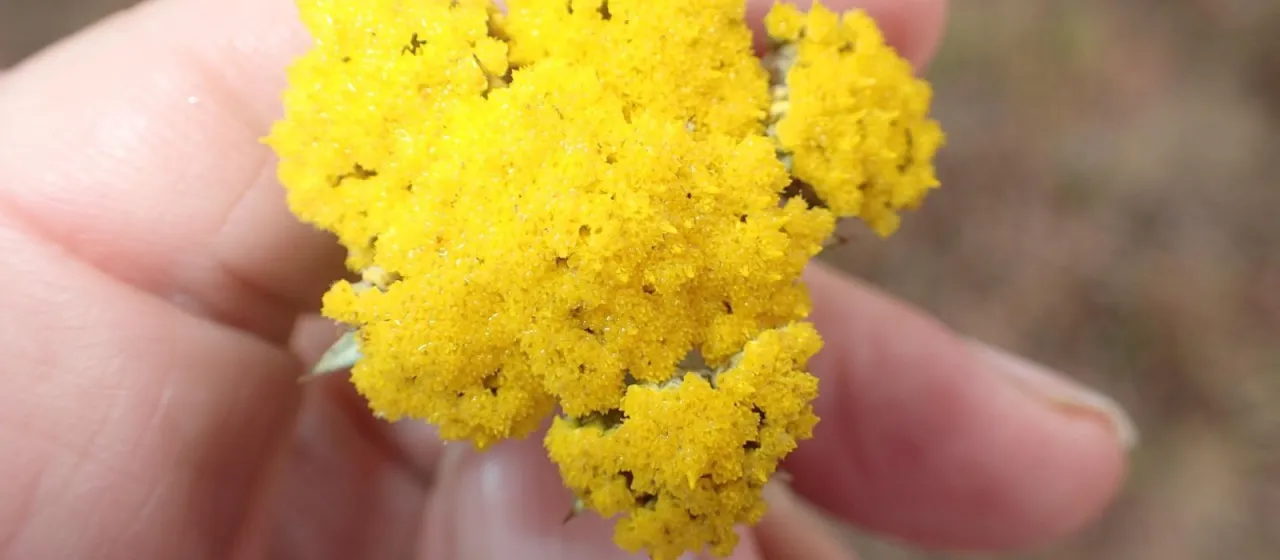
Description
Clustered everlasting (Helichrysum glomeratum) is a perennial herbaceous plant belonging to the Asteraceae family. In agricultural and horticultural terms, this species is highly valued as a sustainable crop for floriculture, specifically for the production of dried flowers that maintain their structural integrity and vibrant appearance for a long time after harvest.
The plant originates from Australia and the surrounding regions, where it has adapted to diverse climatic conditions. Its natural habitat is characterized by well-drained soils and high sun exposure. Today, it is cultivated globally in regions with a temperate climate, primarily for ornamental purposes and as a raw material for decorative floral arrangements.
Botanically, this plant is defined by its compact habit and silvery-tomentose leaves, which serve as an adaptation to minimize water loss. The characteristic clusters of small flower heads are protected by dry, papery bracts. It is these specialized bracts that make the plant an ideal candidate for commercial drying and decorative use.
Agrotechnical requirements prioritize the selection of sunny locations and soils with excellent drainage capabilities. Clustered everlasting is highly sensitive to waterlogging, which can lead to rapid root degradation. Therefore, maintaining soil aeration is a critical management practice. The crop is typically propagated from seed, requiring a temperate environment to ensure optimal germination and early growth.
- Sowing seeds in a high-quality, sterile seedling substrate.
- Transplanting into the field after the danger of frost has passed.
- Spacing plants to ensure sufficient airflow and light penetration.
- Limiting nitrogen fertilizers to prevent excessive vegetative growth.
- Harvesting flower clusters before they are fully open for better drying results.
The crop is susceptible to fungal diseases such as gray mold (Botrytis) and various root rots, which often occur under conditions of high humidity or poor soil drainage. Pest management includes monitoring for aphids and spider mites, which can thrive in dense foliage. Implementing integrated pest management (IPM) practices is essential for healthy crop production.