
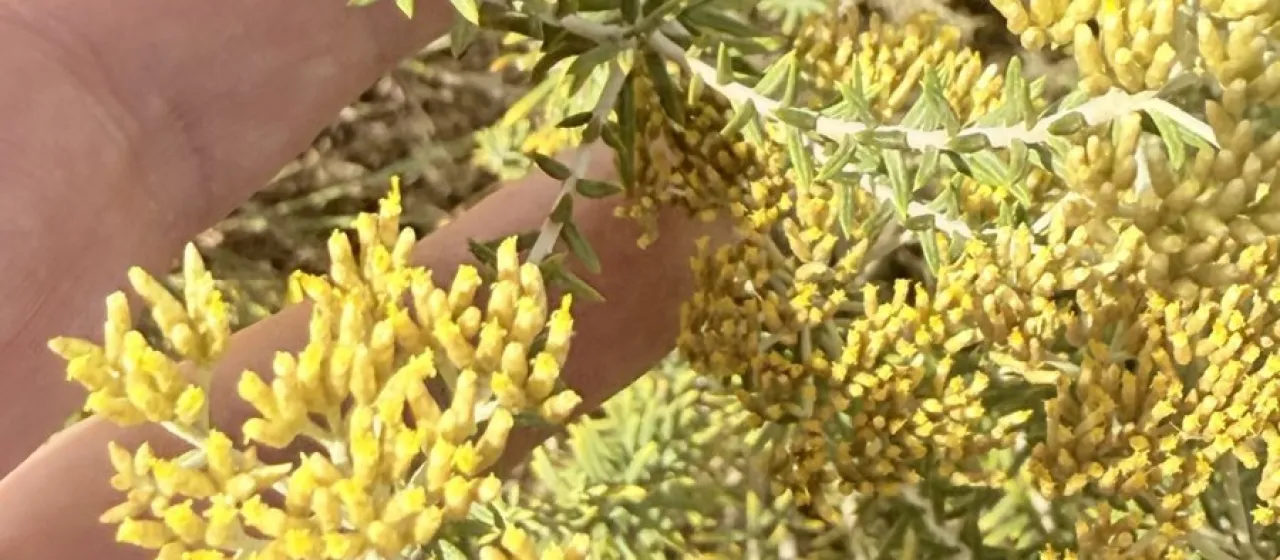
Description
Helichrysum kraussii is a perennial subshrub belonging to the Asteraceae family. Known commonly for its resilience and the durable nature of its flower heads, it is a significant plant in both xeriscaping and the dried flower trade, often classified among the various species of "everlasting" flowers.
The species is native to Southern Africa, predominantly distributed across regions with semi-arid environments. Its natural habitat is typically rocky terrain and nutrient-poor soils, which has resulted in the evolution of highly efficient water-retention mechanisms and deep root systems capable of exploiting limited moisture resources.
Botanically, the plant is characterized by its silvery-grey, densely pubescent leaves that reflect intense sunlight and minimize transpiration. The inflorescences consist of composite heads with papery, dry bracts that maintain their color and integrity even long after the plant has been harvested, which is its most defining horticultural feature.
Cultivation requirements for Helichrysum kraussii are centered around mimicking its arid native environment. It demands full sun exposure to maintain its compact growth habit and requires extremely well-draining soil to prevent root rot. Supplemental irrigation should be provided only during establishment or extreme drought, as the plant is highly susceptible to fungal infections triggered by excessive soil moisture.
Commercial and landscape utility includes its use in rock gardens, borders, and as a raw material for dried flower arrangements. While the plant is generally robust, growers must remain vigilant against pests such as aphids and spider mites, particularly in greenhouses. Proper sanitation and spacing are the primary methods for managing disease and ensuring healthy plant development throughout the growing season.