
Description
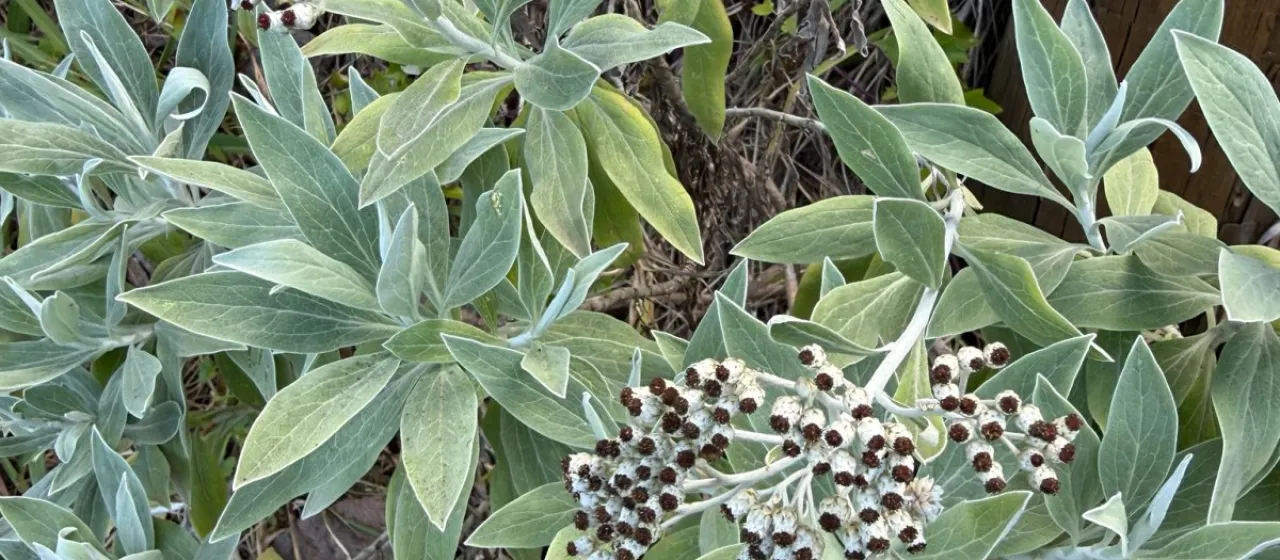
Helichrysum melaleucum, commonly known as the melaleuca-leaved everlasting, is a perennial evergreen shrub belonging to the Asteraceae family. This species is highly valued in horticulture for its distinct silvery-grey foliage and its remarkable ability to thrive in challenging, dry environments with minimal nutrient inputs.
The plant originates from Australia, where it has adapted to Mediterranean-style climates. As an agricultural crop, it is cultivated primarily in regions characterized by mild winters and dry, sunny summers. It requires a significant amount of light to maintain its compact growth form and the intensity of its leaf coloration.
Botanically, the plant is characterized by its densely felted, linear leaves and small, button-like flower heads. The entire plant structure is adapted to water conservation, with specialized hairs reflecting sunlight and reducing transpiration. These features make it a resilient choice for regions experiencing water scarcity.
Agronomic requirements are centered on soil drainage and climate conditions. The plant performs best in sandy, low-fertility soils that do not retain excess moisture. Proper aeration is crucial; therefore, cultivation on well-draining slopes or prepared raised beds is highly recommended to prevent root pathogens.
- High drought tolerance once established.
- Strict requirement for full sun exposure.
- Need for periodic pruning to maintain shape and density.
- Susceptibility to fungal diseases in humid environments.
The primary economic use of Helichrysum melaleucum is in the ornamental plant industry and the floral trade. Its flowers are highly prized as everlasting dried flowers, maintaining their integrity for extended periods after harvest. Additionally, it is used in landscape design for water-wise gardens and as a stabilizing element in dry soil management.