
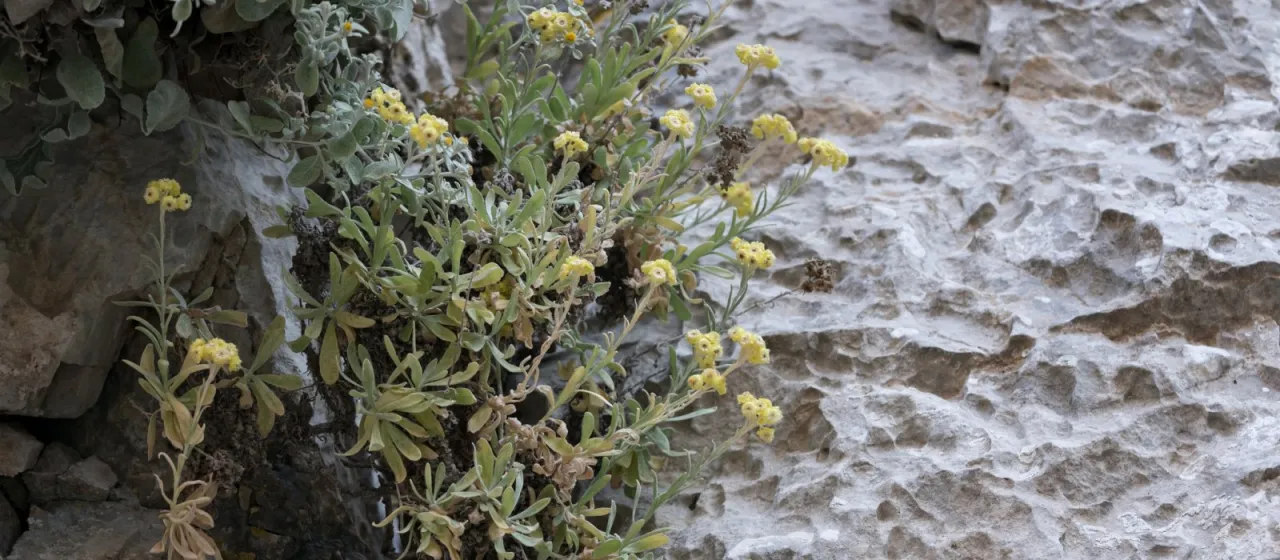
Description
Eastern everlasting (lat. Helichrysum orientale) is a perennial herbaceous plant belonging to the Asteraceae family. It is widely recognized in agriculture and floriculture as a premium species of immortelle, highly valued for its ability to retain its color and structure indefinitely after harvesting, making it a staple for the dried flower market.
Native to the Eastern Mediterranean basin, including Greece and the surrounding coastal regions, this plant has evolved to survive in harsh, arid, and rocky environments. Its natural habitat is characterized by poor soil quality and intense solar exposure. Currently, it is cultivated globally in regions with warm, dry climates that mirror its native environment, primarily for commercial floral trade.
Botanically, the plant is a subshrub with dense silver-tomentose (woolly) foliage, which serves as a protective layer against transpiration losses. The inflorescences consist of tight capitula (heads) with dry, papery, bright yellow bracts. These bracts provide the visual appeal and the structural integrity that prevents the flowers from wilting even long after they have been cut and dried.
Agricultural success depends on providing a well-drained, sandy, or rocky substrate with neutral to slightly alkaline pH levels. The plant is exceptionally sensitive to waterlogging; therefore, site selection must prioritize excellent soil permeability. It is considered a low-maintenance crop, as it thrives in nutrient-poor soils and requires very little irrigation once established, making it suitable for sustainable or dry-farming practices.
- Excellent tolerance to drought and direct sunlight.
- Strict requirement for well-draining soil profiles.
- Ease of propagation via seeds in controlled environments.
- Harvesting protocol involves cutting just before full maturity for optimal color.
The primary economic value of Eastern everlasting lies in the dried flower industry. Its longevity makes it essential for decorative bouquets, wreaths, and artistic arrangements. Furthermore, it holds potential in the pharmaceutical industry due to the presence of secondary metabolites, such as flavonoids and essential oils, which are researched for their anti-inflammatory and bile-stimulating properties.
Pathogen management is centered on controlling fungal diseases, which are the main threats in over-irrigated or humid conditions. Root rot and powdery mildew are the most common agricultural concerns. Growers should focus on spacing plants adequately to ensure good airflow. In terms of insect control, monitoring for aphids and spider mites during the peak of summer is recommended to maintain the quality of the harvestable inflorescences.