
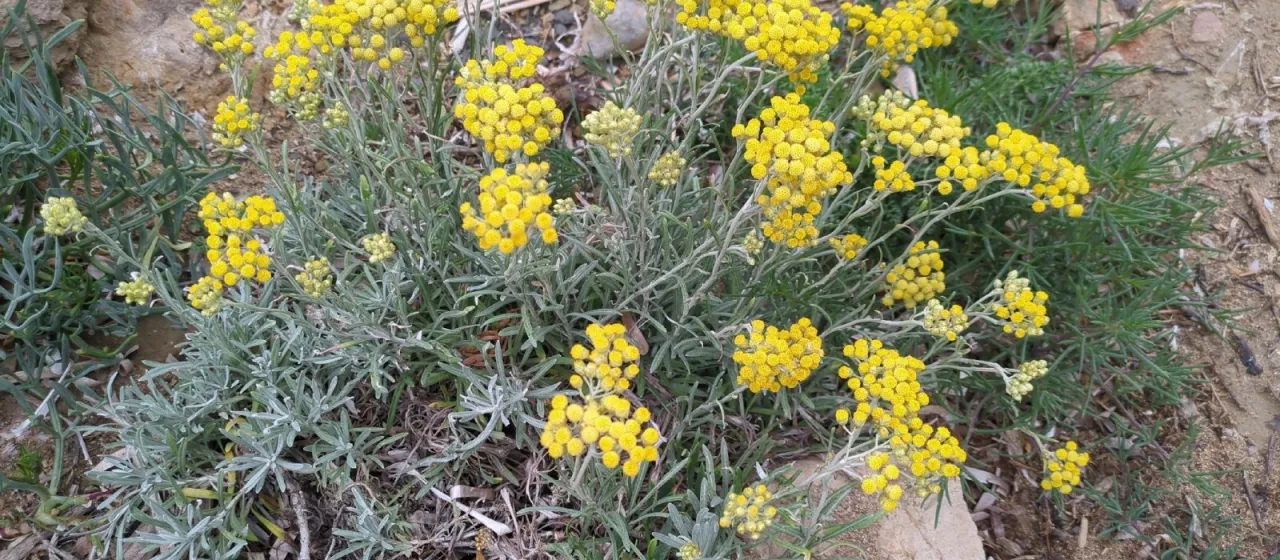
Description
Pendulous everlasting (lat. Helichrysum pendulum) is a distinctive perennial plant belonging to the Asteraceae family. Known for its elegant, cascading habit and silver-hued foliage, this species is highly valued in horticulture for its decorative appeal and longevity, particularly when harvested for dried floral arrangements.
Native to arid regions, this plant has adapted to survive in harsh, moisture-deficient environments. In agricultural and ornamental settings, it thrives in regions with low humidity and high sunlight levels. Its natural distribution demonstrates an evolutionary preference for sandy or stony habitats where drainage is rapid and constant.
Botanically, the plant is characterized by its slender, drooping stems and specialized leaves covered in fine hairs that minimize water loss. These features not only assist the plant in surviving drought conditions but also give it a unique aesthetic that distinguishes it from other species within the Helichrysum genus.
Agronomic requirements are centered on soil structure and sun exposure. It requires full sun and exceptionally well-draining, poor, sandy soil. Fertilization should be kept to a minimum, as excessive nutrients can negatively impact the plant's structural integrity and drought tolerance. Proper pruning after the flowering season helps to maintain its pendulous shape and prevents woodiness.
- Requires full solar exposure.
- Thrives in sandy, low-nutrient soils.
- Requires minimal irrigation.
- Susceptible to root rot if waterlogged.
The primary economic use is in the dried flower trade and landscape architecture, specifically for rock gardens or container gardening where its cascading form can be showcased. Key management challenges include preventing fungal diseases in the root zone through careful water management and monitoring for pests like aphids or spider mites, which can be detrimental in warm, dry greenhouse conditions.