
Description
Siberian hemarthria (Hemarthria sibirica) is a perennial grass species belonging to the Poaceae family. As an agricultural crop, it is recognized for its robustness, high biomass production, and adaptability to specific moisture-rich environments, making it a valuable candidate for livestock feed development in suitable climatic zones.
The origin of this species traces back to the temperate regions of East Asia, primarily the Russian Far East, Mongolia, and Northern China. In its natural habitat, it thrives in river floodplains and moist meadows. This evolutionary background allows the crop to tolerate occasional waterlogging and high humidity levels that would be detrimental to other types of forage grasses.
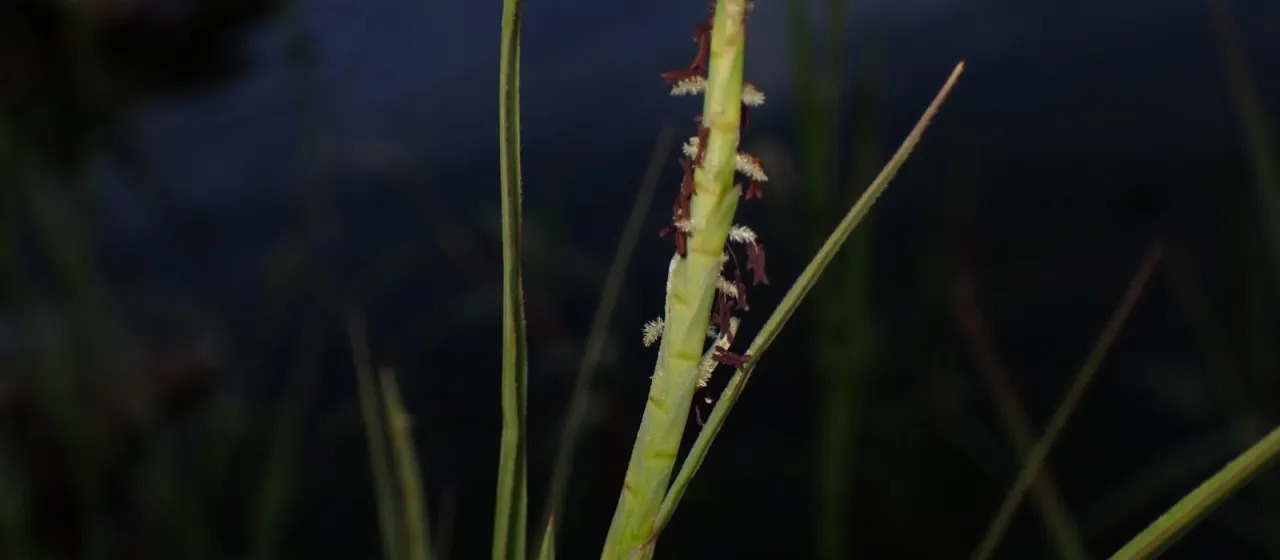
Botanically, Hemarthria sibirica is characterized by its rhizomatous growth habit, which helps in soil stabilization and forming a dense sward. The leaves are narrow and linear, providing high-quality forage when harvested at the right phenological stage. The inflorescence is a spike-like raceme, typical of the Andropogoneae tribe, designed for efficient wind pollination and seed dispersal.
Agronomic requirements for Siberian hemarthria focus on soil fertility and moisture management. Successful cultivation requires a seedbed that is free of debris and well-leveled to ensure uniform germination. Key technical operations include:
- Soil testing to determine nutrient needs, specifically nitrogen and phosphorus requirements.
- Optimal planting time during the spring moisture window.
- Regular management of nitrogen levels to maximize leafy biomass.
- Controlled grazing or mowing intervals to ensure long-term stand longevity.
The primary agricultural use of Siberian hemarthria is in forage production, including grazing and haymaking. Its nutritional profile makes it an excellent choice for cattle feed. While the plant is generally resistant to many common cereal diseases, farmers should monitor for minor leaf spot diseases in exceptionally humid years. Insect pests are typically managed through standard integrated pest management practices, ensuring minimal impact on yield.