
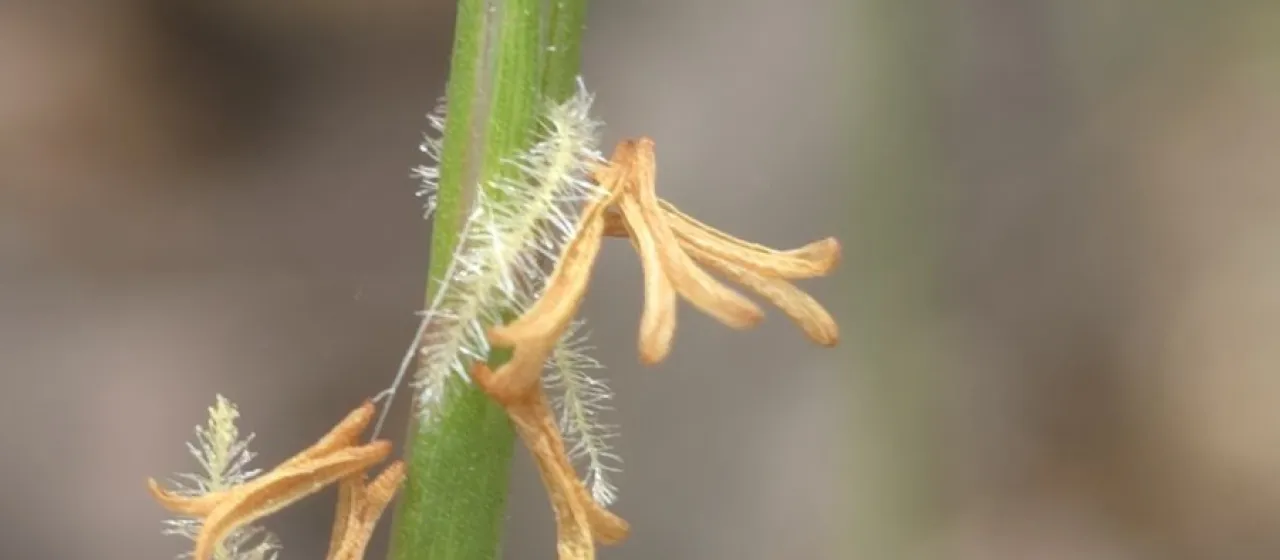
Description
Hemarthria uncinata, commonly known as mat grass, is a perennial forage species belonging to the Poaceae family. This resilient grass is highly regarded in agricultural systems for its vigorous growth habits and its ability to withstand intensive grazing, making it an excellent choice for livestock farmers in suitable climate zones.
Originating from Southern Africa, the species has successfully naturalized in various regions globally. Its native distribution highlights its capacity to thrive in diverse environments, ranging from well-drained soils to areas prone to seasonal waterlogging, which often limits the cultivation of more sensitive forage plants.
Botanically, it is characterized by its prostrate or semi-erect growth form, featuring stems that root readily at the nodes. This morphological trait allows the plant to form a dense, mat-like ground cover that protects the soil surface and efficiently suppresses weed encroachment. Its inflorescences consist of compressed, spike-like racemes that produce viable seeds under optimal conditions.
In terms of agricultural management, Hemarthria uncinata requires moderate to high rainfall or supplemental irrigation to maximize biomass production. It is well-adapted to a wide range of soil textures, though it performs best in fertile, moisture-retentive soils. Maintenance includes periodic mowing or managed grazing cycles to prevent the stems from becoming overly lignified, thus preserving palatability and nutritional quality.
The primary economic use of this grass is for grazing pastures and hay production. It is recognized for its high palatability to cattle and sheep. While the plant is generally robust, it may be susceptible to fungal pathogens such as rust or leaf spot during periods of high humidity. Standard pest management practices, including balanced fertilization and rotational grazing, are usually sufficient to maintain healthy and productive stands.