
Description
Hoheria angustifolia, commonly known as the narrow-leaved lacebark, is an elegant evergreen tree belonging to the Malvaceae family. Recognized for its slender form and refined, narrow foliage, this species is a highly valued ornamental plant in temperate climates, capable of growing into a medium-sized tree under ideal conditions.
The species is native to New Zealand, where it is found in lowland forests and along riverbanks. Its natural habitat implies a preference for moist, well-drained soils and protection from harsh, drying winds. While it thrives in maritime climates, it requires specific site selection to protect its young branches from freezing temperatures during winter.
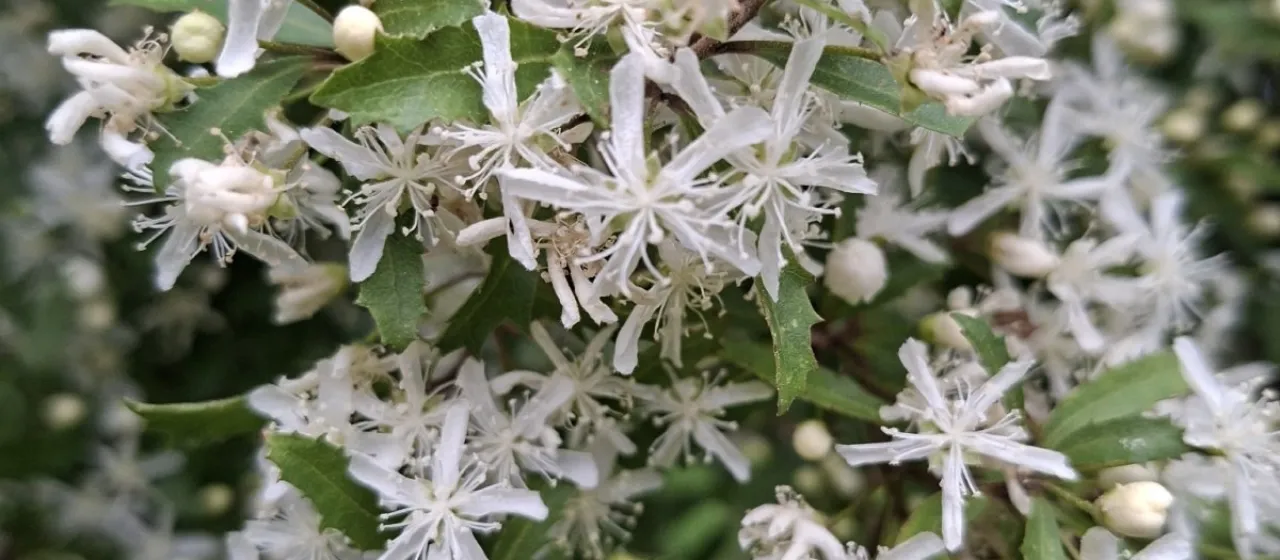
Botanically, Hoheria angustifolia is distinguished by its leathery, serrated leaves and a profusion of small, white, fragrant flowers produced in the summer. These flowers create a striking visual impact against the dark green foliage. The tree's bark is notably smooth and thin, which gives rise to its common name and adds to its ornamental appeal.
In terms of agricultural and horticultural requirements, the tree performs best in deep, fertile soils that are rich in organic matter. Proper irrigation is essential during the establishment phase and throughout dry summer spells to prevent leaf scorch and root stress. Mulching the base of the plant helps maintain soil moisture levels consistently.
Landscape use is the primary application for this tree, as it excels in hedge formation, as a focal point in woodland gardens, or as part of a mixed-species shrubbery. Maintenance involves routine pruning to shape the canopy and remove dead wood. Common pests include aphids and scale insects, which can be managed with integrated pest management techniques.