
Description
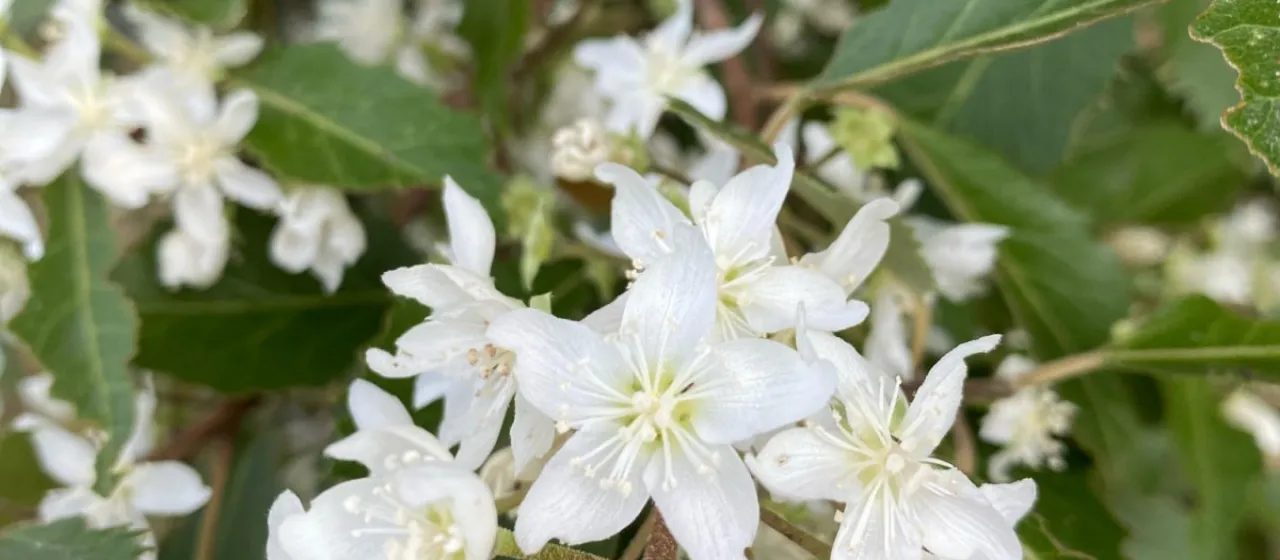
Hoheria sexstylosa, commonly known as the long-ribbonwood, is a striking evergreen tree or large shrub belonging to the Malvaceae family. It is highly valued in horticulture for its narrow, upright growth habit and its spectacular display of white, star-shaped flowers that bloom in abundance during the summer months.
Native to New Zealand, this plant thrives in regions with temperate maritime climates. It is typically found in coastal and lowland forest areas. When introduced to landscapes abroad, it requires a sheltered position protected from harsh, drying winds and excessive frost, as it is moderately hardy but can suffer in extreme cold.
Botanically, the plant is characterized by its serrated, leathery leaves and distinctive bark. Its rapid growth rate makes it an excellent choice for quick screening or hedging. The flowers, which appear in large clusters, are hermaphroditic and feature six styles, which is reflected in its specific botanical name.
Successful cultivation of Hoheria sexstylosa involves meeting several key agricultural requirements:
- It prefers deep, moisture-retentive, but well-drained fertile soils.
- Regular watering is crucial during the first few years of establishment to ensure deep root growth.
- Organic mulching helps maintain consistent soil temperature and moisture levels.
- Occasional pruning helps to manage the tree's height and maintain a dense, attractive foliage structure.
In terms of usage, the plant is predominantly utilized for ornamental landscaping, serving as an eye-catching specimen tree or an architectural element in urban planning. While relatively resistant, it can occasionally be susceptible to scale insects or powdery mildew if planted in poor air-circulation spots. Proper spacing and site selection are the best preventative measures against common garden pests and diseases.