Houpara
Pseudopanax lessonii (DC.) K. Koch
Description
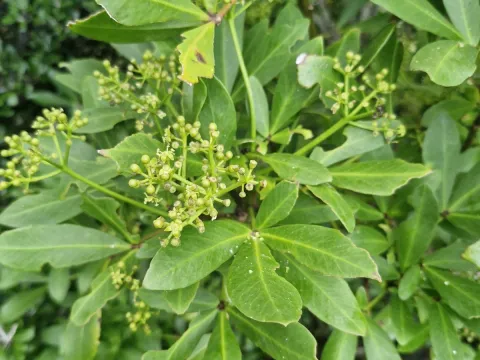
Houpara, known scientifically as Pseudopanax lessonii, is a robust evergreen shrub or small tree belonging to the Araliaceae family. It is a highly valued plant in temperate landscaping due to its glossy, leathery foliage and its ability to withstand coastal conditions.
The species is native to New Zealand, primarily found in coastal and lowland forests on the North Island. Because of its natural adaptation to maritime environments, it is commonly cultivated in similar climatic zones worldwide, where it serves as both a structural plant and a decorative feature in garden beds.
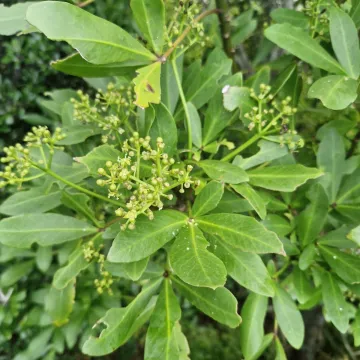
Botanically, the plant is characterized by its palmate leaves, which often feature three to five leaflets. As the plant matures, it can develop a dense, rounded canopy reaching heights of several meters. While its flowers are relatively inconspicuous, they provide a subtle contrast to the dark, thick foliage and eventually give way to small, dark fruit.
Successful cultivation requires well-drained, fertile soil with a neutral to slightly acidic pH. The plant thrives in full sun or light shade, provided it is shielded from harsh, cold winds. Cultural practices include consistent irrigation, particularly during dry seasons, and periodic light pruning to maintain a tidy and compact shape.
Common horticultural and landscape applications include:
- Establishing durable windbreaks and privacy hedges.
- Using as a standalone specimen plant in diverse garden styles.
- Container gardening for patios and decks in cooler climates.
- Restoration projects in coastal native plant gardens.
Regarding health management, the plant is occasionally susceptible to scale insects and aphids, particularly in sheltered or indoor environments. Root rot remains the most significant threat, typically triggered by waterlogged soil. Ensuring adequate soil drainage and avoiding over-irrigation are critical steps in preventing fungal pathogens and ensuring plant longevity.
Photo gallery