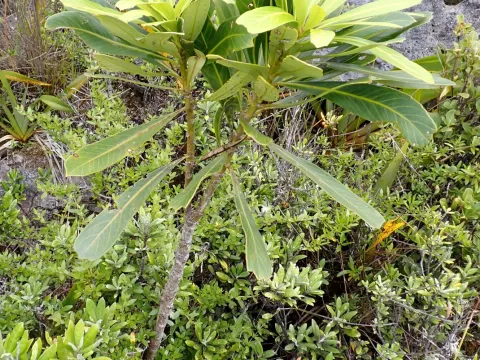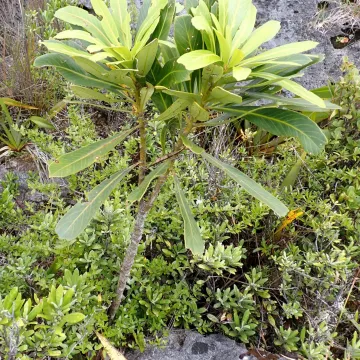
Chatham Island lancewood
Pseudopanax chathamicus T. Kirk
Description
Chatham Island lancewood (Pseudopanax chathamicus) is a distinctive evergreen tree belonging to the Araliaceae family. Known for its elegant appearance, it is a significant botanical species native to the Chatham Islands of New Zealand. In cultivation, it is highly valued for its slow growth rate, architectural branching, and attractive foliage that provides structure to any garden.
The plant originates from the rugged, maritime environment of the Chatham Islands, where it thrives in cool and humid conditions. Because of its native habitat, it is well-adapted to oceanic climates. In landscape architecture, it is successfully grown in regions that avoid harsh, freezing temperatures, often serving as a focal point in mild-climate coastal gardens.
Botanically, the species is defined by its tough, leathery leaves which exhibit significant heteroblasty—meaning the juvenile and adult forms differ significantly. Juvenile leaves are often narrow and serrated, while mature foliage tends to be broader and more simple in shape. These trees can reach a height of several meters, creating a dense canopy that provides shelter for smaller shade-loving plants.
Agrotechnical requirements focus on providing a stable environment. The tree prefers well-drained, fertile soil with a slightly acidic to neutral pH. Proper water management is critical; while it enjoys moisture, it cannot tolerate "wet feet" or waterlogged roots. Regular monitoring for pests such as aphids or scale insects is recommended, especially for plants kept in containers or sheltered areas.
- Light requirements: partial shade to full sun with protection from harsh midday heat.
- Soil type: well-draining loamy soil with organic matter.
- Pruning: periodic removal of dead wood and shaping to maintain desired form.
- Watering: consistent irrigation, allowing the surface soil to dry out between waterings.
The primary use of this species is ornamental. It is frequently employed in high-end landscaping to provide texture and year-round green. Due to its robustness against salt spray in its natural range, it is an excellent candidate for coastal landscape restoration or seaside garden designs, adding both beauty and hardiness to the site.
Photo gallery