Hylotelephium tatarinowii
Hylotelephium tatarinowii (Maxim.) H. Ohba
Description
Hylotelephium tatarinowii is a perennial succulent species belonging to the Crassulaceae family. Widely recognized for its resilience and unique appearance, this plant is frequently cultivated in specialized landscaping for its ability to thrive in harsh environments.
Native to the mountainous regions of East Asia, including China and Korea, this species has evolved to withstand extreme temperature fluctuations and nutrient-poor, rocky substrates. Its natural habitat includes steep slopes and cliff crevices, indicating its high drought tolerance.
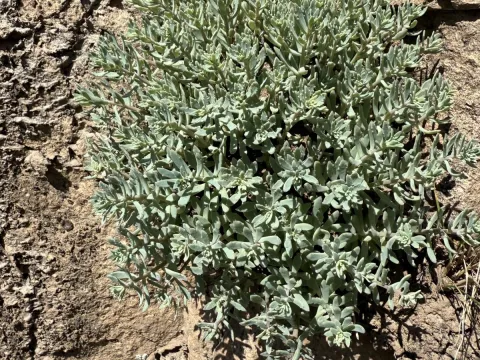
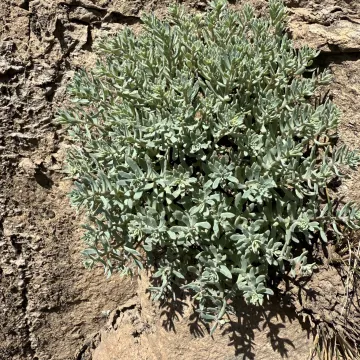
Botanically, it features fleshy, succulent leaves that serve as water reservoirs. The stems are typically low-growing or ascending, culminating in clusters of small, pale flowers during the summer months. This morphological structure makes it highly efficient at managing transpiration in dry climates.
The agrotechnical requirements for successful cultivation focus on drainage. The substrate must be porous and well-aerated; heavy or waterlogged soils are detrimental and typically cause root rot. Exposure to direct sunlight is essential for the plant to maintain its characteristic compact form and vibrant leaf coloration.
- Requires minimal supplemental irrigation once established.
- Thrives in lean, mineral-rich, or sandy soil conditions.
- Excellent for vertical gardening and xeriscaping projects.
- Prone to fungal pathogens if humidity is consistently high.
In terms of хозяйственного usage, the species is primarily ornamental, favored for rockeries, green roofs, and drystone walls. It is considered a low-maintenance plant that requires little to no fertilization, making it a sustainable choice for drought-prone landscapes.
Photo gallery