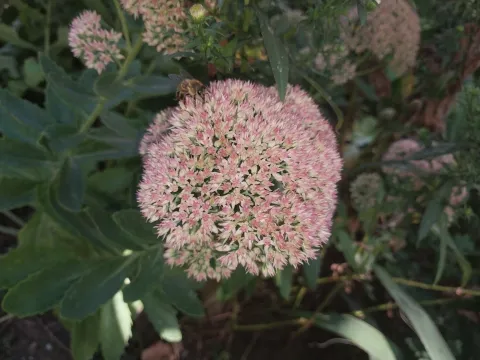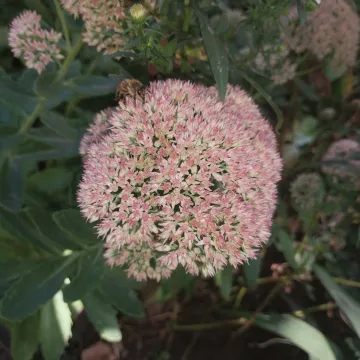
Showy stonecrop
Hylotelephium spectabile (Boreau) H. Ohba
Description
Showy stonecrop (Hylotelephium spectabile) is a robust perennial plant belonging to the Crassulaceae family. Widely recognized for its architectural form and late-season blooms, this plant was formerly classified under the genus Sedum. It is highly valued in horticulture for its resilience and the low-maintenance requirements it demands from the gardener.
The plant originates from East Asia, specifically regions within China and Korea. In its native habitat, it thrives on rocky slopes and mountain ridges, demonstrating an evolutionary adaptation to thin, well-draining soils. These traits have made it a staple in temperate garden designs worldwide, where it serves as a reliable performer in various climatic zones.
Botanically, it features thick, fleshy, glaucous green leaves arranged on sturdy, upright stems. The root system is characterized by tuberous, thickened roots that facilitate water storage. The plant produces large, flattened cymes composed of numerous tiny, star-shaped flowers that bloom in shades ranging from delicate pink to deep magenta, typically emerging from late summer through autumn.
Cultivation requires full sun exposure and well-draining soil to prevent root rot. It is exceptionally drought-tolerant once established and does not thrive in overly fertilized or waterlogged conditions. Maintenance involves basic tasks such as cutting back the foliage in late winter or early spring, and dividing mature clumps every few years to maintain plant vigor and prevent the center from becoming sparse.
Horticulturally, showy stonecrop is used for borders, rock gardens, and mass plantings. It is a significant source of nectar for pollinators such as bees and butterflies during the late flowering season when other blooms have faded. Its ability to tolerate dry soil also makes it an excellent candidate for xeriscaping and sustainable garden practices that require minimal irrigation.
The plant is generally hardy, though it may occasionally suffer from pests like aphids or vine weevils. Fungal diseases such as powdery mildew or crown rot can occur if soil drainage is inadequate or air circulation is poor. Effective management focuses on cultural practices, such as ensuring proper spacing and avoiding overhead irrigation, which significantly reduces the risk of disease outbreaks.
Photo gallery