
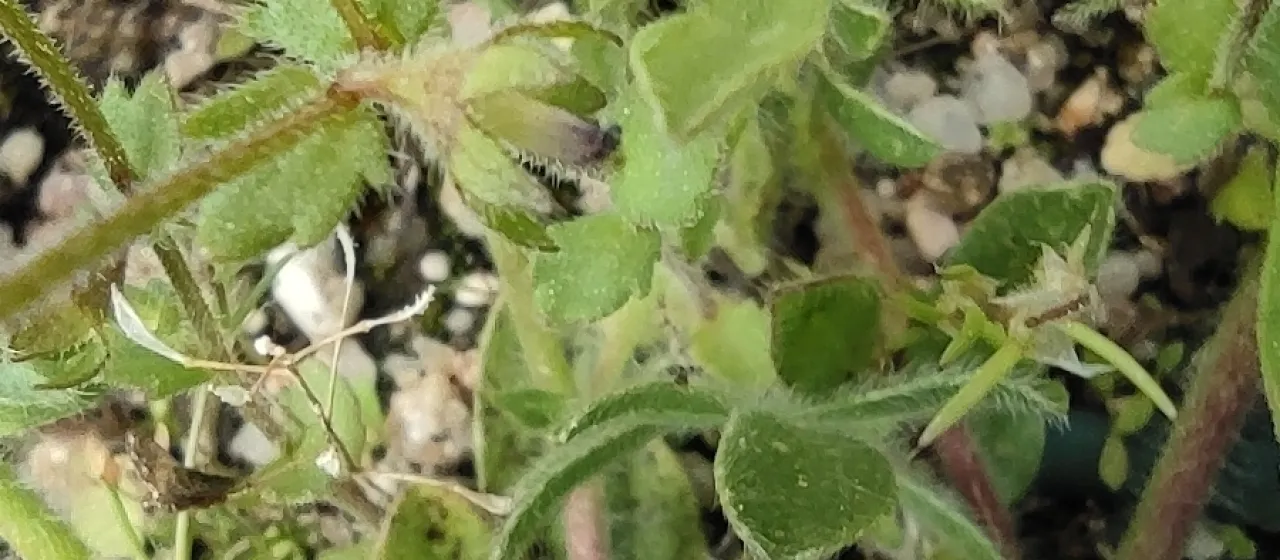
Description
Hymenocarpos cornicina is an annual herbaceous plant belonging to the Fabaceae family. As a crop, it is gaining recognition for its potential in arid and semi-arid agricultural systems, where its inherent hardiness allows for biomass production in environments considered marginal for conventional legumes.
The native range of this species is centered in the Mediterranean region, extending across North Africa and parts of Western Asia. It typically thrives in rocky or sandy substrates, demonstrating an remarkable ability to colonize dryland areas and stabilize soils through its deep and efficient root system.
Botanically, the plant is characterized by its pinnate foliage and distinctive, sickle-shaped or horn-like pods. These pods serve as a physical protective mechanism for the seeds, which is an evolutionary trait developed in response to harsh environmental conditions. The plant's growth habit is typically prostrate to semi-erect.
From an agrotechnical perspective, it requires minimal input. It prefers well-drained soils and is highly responsive to the natural rainfall patterns of Mediterranean-type climates. Sowing should ideally take place early in the season to capitalize on moisture availability before the onset of the peak summer drought.
Its primary economic use is as a high-protein forage source for sheep and goats. In terms of plant health, it is generally robust, though it can be affected by standard legume pests like aphids and pod borers if planted in high-density monocultures. Proper crop rotation is recommended to prevent the buildup of soil-borne pathogens.