
Description
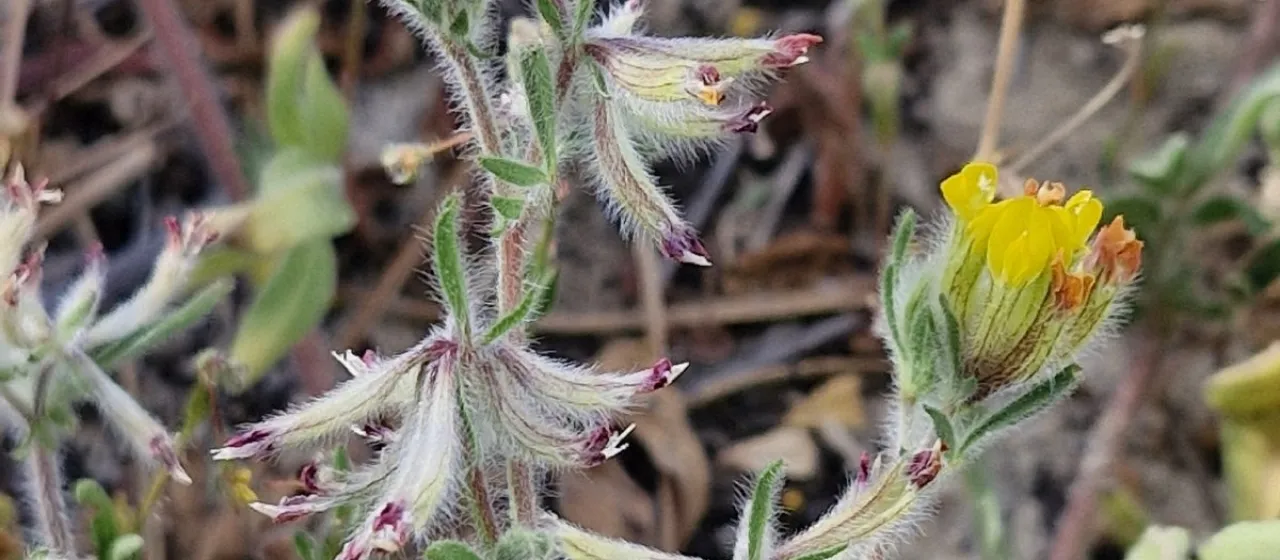
Hymenocarpos hamosus is an annual herbaceous plant belonging to the Fabaceae family. Known for its distinctively curved, hook-shaped pods, this legume is primarily recognized in agricultural studies for its ability to thrive in harsh, dry environments. While not a conventional commercial crop, it plays a vital role in the ecology of Mediterranean grazing lands.
The plant originates from the Mediterranean basin, extending across Northern Africa, Southern Europe, and parts of Western Asia. It is naturally adapted to dry, stony soils and open fields where limited water availability restricts the growth of more demanding forage species. Its evolutionary strategy focuses on rapid growth during the short spring season to complete its life cycle before the summer drought.
Botanically, the plant features pubescent leaves and small, bright yellow flowers arranged in umbels. The root system is moderately developed, allowing it to efficiently draw water from the shallow soil horizon. The most notable characteristic is the fruit structure: segmented, curved pods that protect the seeds and facilitate dispersal through attachment to the coats of grazing livestock.
In terms of cultivation, Hymenocarpos hamosus requires minimal intervention, preferring well-drained, calcareous soils with high solar exposure. It is highly drought-tolerant and performs well in regions where traditional agriculture is challenging. Management techniques are simple, primarily focusing on maintaining soil integrity and allowing the plant to reach the seed-setting stage to ensure self-reseeding for the next season.
The primary agricultural applications of the crop include:
- Providing high-protein forage for small ruminants such as sheep and goats.
- Serving as a key component in restoring degraded lands through nitrogen fixation.
- Acting as a stabilizer for loose, erosion-prone soils in arid environments.
Common agricultural challenges involve susceptibility to fungal pathogens if humidity levels spike during the vegetative stage. Pests, particularly seed-feeding weevils, can significantly reduce yield quality by damaging the developing pods. Despite these issues, the plant remains a valuable genetic resource for developing resilient forage systems in climate-stressed regions.