
Description
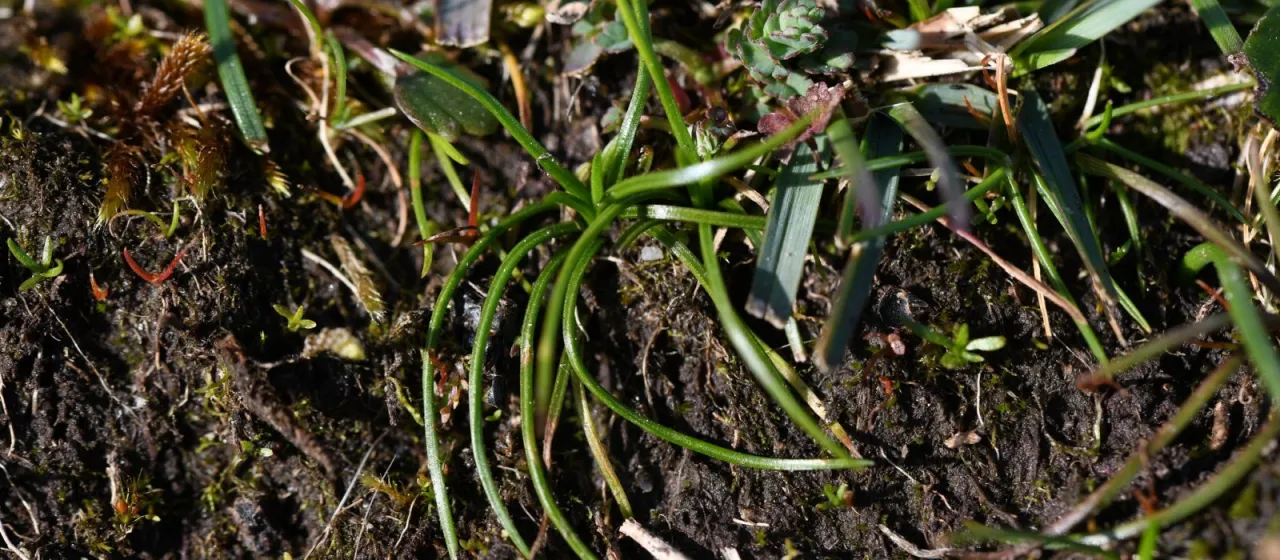
Sand quillwort (Latin: Isoetes histrix) is a perennial, spore-bearing plant species belonging to the family Isoetaceae. While it is classified as a botanical curiosity rather than a commercial agricultural crop, it remains a critical subject for conservationists and ecological researchers focusing on wetland biodiversity.
The plant originates from the Mediterranean basin and extends along the Atlantic coast of Europe. Its natural range is characterized by seasonal wetland areas, where the substrate remains waterlogged during the cool winter and spring months, providing the necessary moisture for the plant's life cycle before summer desiccation.
Botanically, Isoetes histrix is distinguished by a short, bulbous stem from which arise numerous stiff, needle-like leaves, known as phyllopodia. The plant derives its name from its megaspores, which are uniquely adorned with spine-like projections, an adaptation that assists in anchoring the spores in the muddy substrate following seasonal flood recession.
This species requires highly specific environmental conditions, thriving in open, sun-exposed habitats with minimal competition from other vegetation. It is not cultivated for agricultural purposes; its growth is strictly limited to natural ecological niches. Any attempt to artificially propagate this species requires precise control of both soil pH and seasonal hydrological shifts.
Sand quillwort is not subject to traditional crop diseases or pest infestations known in commercial agriculture. However, it is an extremely fragile species highly susceptible to habitat loss, soil erosion, and changes in land management practices. Due to these factors, it is often prioritized in regional biodiversity monitoring programs.