
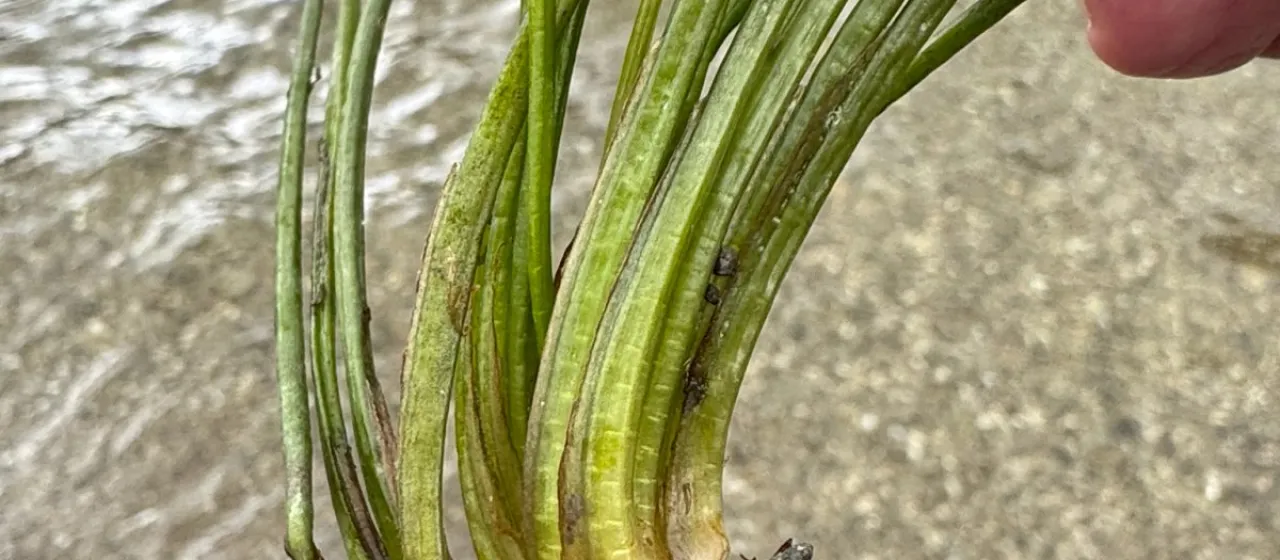
Description
Lake quillwort (Isoetes lacustris) is a perennial spore-bearing plant belonging to the Isoetaceae family. Despite its grass-like appearance, it is a lycophyte, a group of vascular plants that have existed for hundreds of millions of years. It serves as a living fossil in modern aquatic ecosystems.
The plant is native to the cold, clear, nutrient-poor (oligotrophic) lakes of the Northern Hemisphere, including parts of Europe and North America. It thrives in high-latitude environments where water remains cool throughout the summer. The species is highly specialized, preferring sandy or rocky lake bottoms rather than silty substrates.
Botanically, it consists of a basal rosette of stiff, quill-like leaves emerging from a corm-like rootstock. These leaves contain air chambers that help the plant remain buoyant and facilitate gas exchange. Interestingly, lake quillwort primarily acquires the carbon dioxide necessary for photosynthesis through its roots from the sediment, rather than from the water column.
Regarding its environmental requirements, the plant demands exceptionally clean water with low nutrient levels. It acts as a sensitive bioindicator; its presence or absence often reflects the water quality of a given lake. In terms of conservation management, the focus is placed on protecting water bodies from eutrophication and excessive turbidity caused by runoff.
While lake quillwort is not a commercial agricultural crop, it holds significant ecological value. It provides essential habitat for small invertebrates and contributes to the oxygenation of the lake bottom. The plant is currently listed as a protected or threatened species in many jurisdictions due to habitat loss and the increasing impact of climate change on its specialized aquatic niche.