
Description
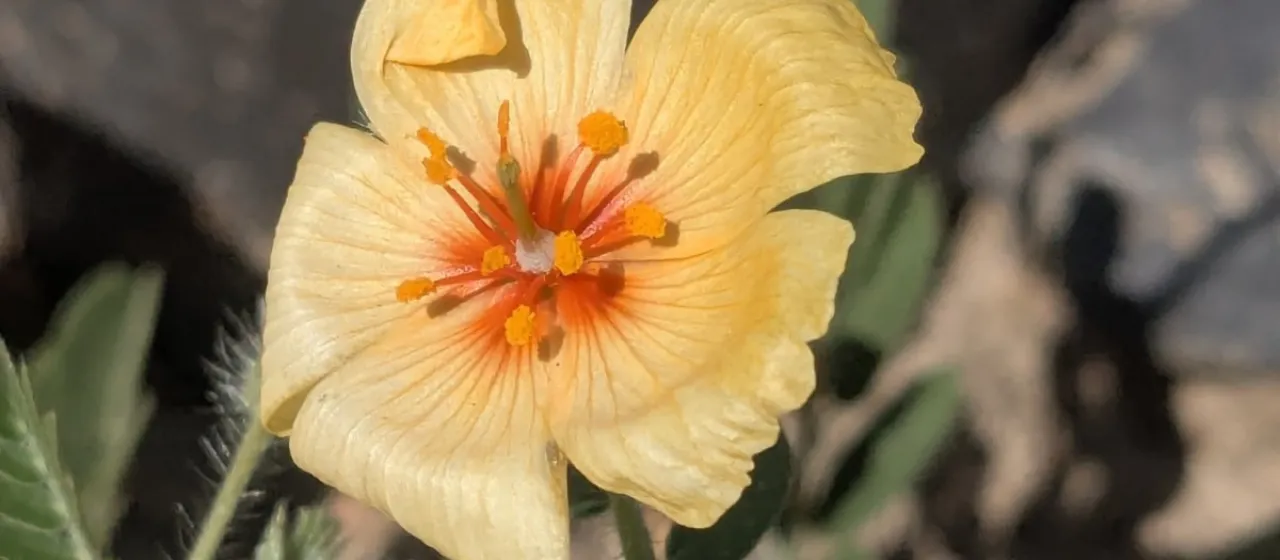
The Arizona poppy (Kallstroemia grandiflora) is an annual herbaceous plant belonging to the Zygophyllaceae family. Despite its common name, it is not a true poppy but is highly valued for its vibrant, eye-catching yellow-orange flowers that bloom rapidly in arid environments.
Native to the desert regions of the southwestern United States and Mexico, this species thrives in harsh conditions. Its natural habitat includes sandy flats, rocky slopes, and desert grasslands, where it relies on episodic rainfall to trigger its spectacular and short-lived blooming season.
Botanically, the plant features prostrate or ascending stems that spread across the ground. Its leaves are pinnate and often covered in fine trichomes, which help reduce transpiration. The flowers are solitary and cup-shaped, standing out against the foliage, and are pollinated by desert-adapted insects, primarily bees.
When cultivating Kallstroemia grandiflora, it is essential to prioritize high solar exposure and excellent soil drainage. In an agricultural or garden setting, it requires very little water once established. Heavy or compacted soils must be amended with grit or sand to prevent root rot, as the plant is not adapted to moist, humid conditions.
The primary use of the Arizona poppy is in xeriscaping and ecological restoration projects. It serves as an excellent ground cover for degraded arid sites due to its rapid growth and soil-holding properties. It remains largely unaffected by common garden pests due to its chemical defenses, though monitoring for fungal issues during periods of unexpected humidity is advised.