
Description
Kallstroemia intermedia is an annual herbaceous plant belonging to the Zygophyllaceae family. This species is highly adapted to the harsh environmental conditions of arid and semi-arid regions, displaying remarkable resilience to extreme temperature fluctuations and water scarcity.
The native distribution of this plant includes the southwestern United States and northern Mexico. It typically thrives in sandy, gravelly, or disturbed soils. It is frequently observed in open desert shrublands, overgrazed rangelands, and along roadsides, where it can rapidly establish itself after rainfall events.
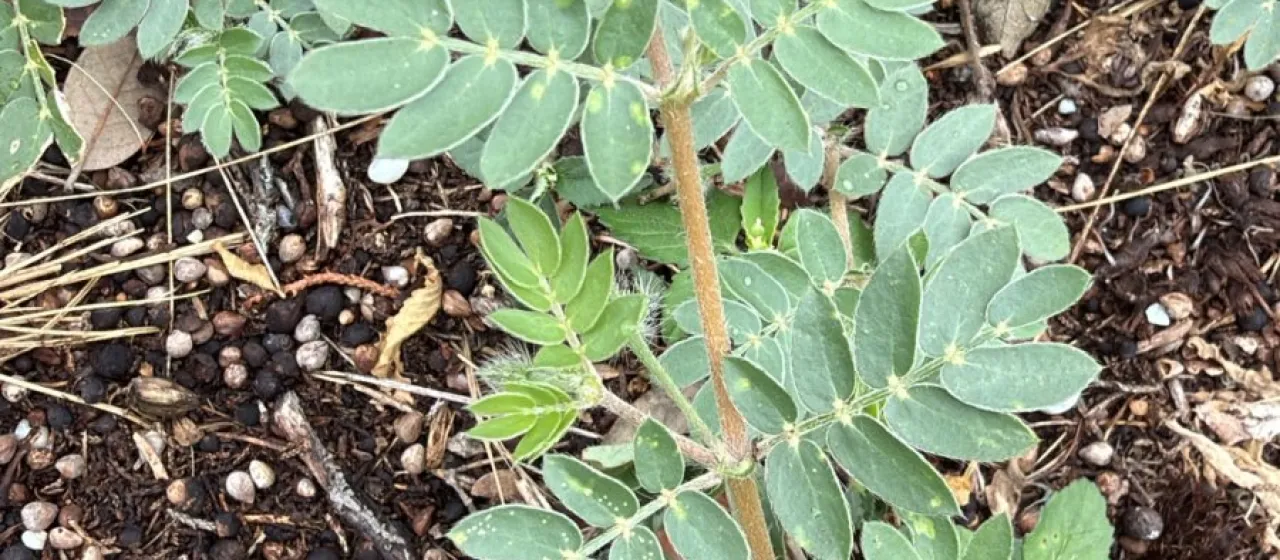
Botanically, Kallstroemia intermedia is characterized by its prostrate or sprawling growth habit, often forming mats across the soil surface. The foliage consists of pinnately compound leaves, and the plant produces distinctive orange-yellow flowers. The fruit is a schizocarp that separates into individual nutlets, a mechanism that facilitates effective seed dispersal in arid environments.
Regarding climate and soil requirements, the species is perfectly suited to desert life. It requires high light intensity and minimal soil moisture to initiate germination and growth. It is not cultivated for agricultural purposes; instead, it is often managed as a spontaneous weed in rangelands where it may compete with forage grasses for limited water resources.
The agricultural impact of this plant is largely neutral, although it can be problematic in intensively managed fields. There are no specific widespread pests or diseases that threaten its survival, as it has developed natural resistance mechanisms characteristic of the Zygophyllaceae family. Its ecological role remains significant in maintaining soil stability in fragile dryland ecosystems.
- Annual growth habit.
- Orange-yellow flowers.
- Pinnately compound leaves.
- Drought-resistant physiological traits.
- Common in desert ecosystems.