
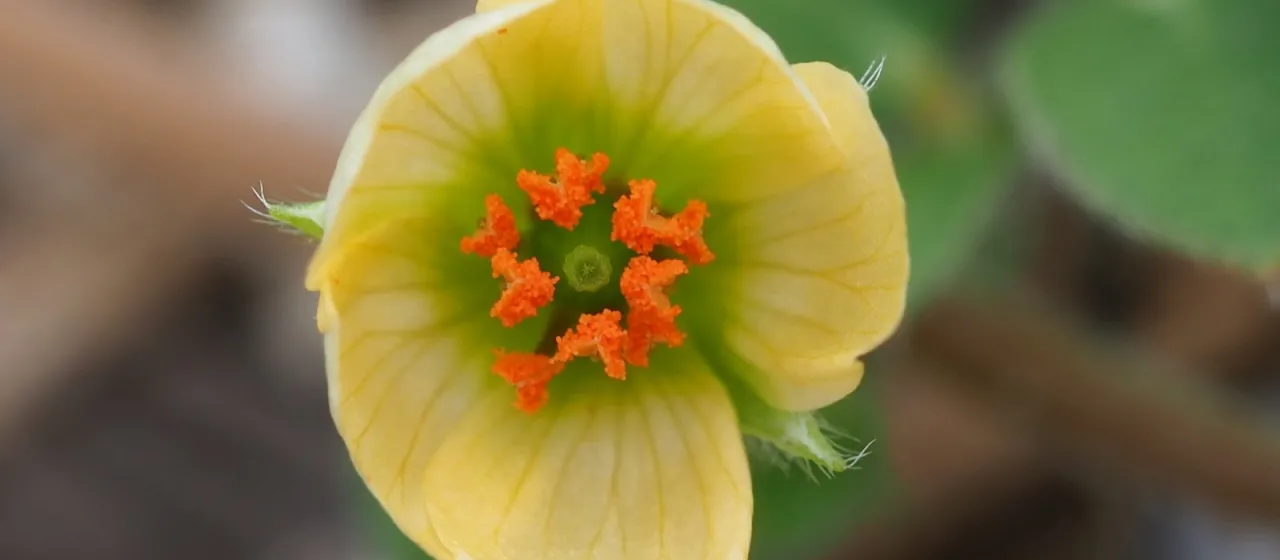
Description
Kallstroemia maxima is an annual herbaceous plant belonging to the Zygophyllaceae family. In agricultural settings, it is primarily recognized as a prolific weed that can interfere with crop development by competing for essential moisture and soil nutrients, often becoming a significant issue in open-field horticulture.
The plant originates from the tropical and subtropical regions of the Americas. Its current distribution spans across various Caribbean islands, South America, and parts of the United States. It thrives in disturbed habitats, making it a common sight on cultivated farmland, pastures, and along rural road networks.
Botanically, it is characterized by trailing or ascending stems that can spread across the ground. The leaves are pinnately compound and arranged oppositely. The flowers are typically yellow, featuring five petals, and develop into hard, dehiscent schizocarps that aid in efficient seed dispersal, contributing to the plant's rapid colonization capabilities.
Kallstroemia maxima requires high levels of solar radiation and prefers well-drained, sandy or loamy soils. It is notably drought-tolerant, allowing it to flourish in semi-arid conditions where other vegetation might struggle. Agricultural management practices include:
- Regular mechanical cultivation between crop rows.
- Application of selective pre-emergent or post-emergent herbicides.
- Implementation of crop rotation cycles to disrupt the growth cycle.
- Maintaining soil fertility to support rapid crop canopy closure.
While the plant has minimal direct economic value, it is of interest in botanical studies regarding its resilience. Farmers must remain vigilant, as the presence of K. maxima can harbor harmful pests and diseases. Effective integrated pest management (IPM) remains the gold standard for controlling its proliferation on commercial agricultural sites.