
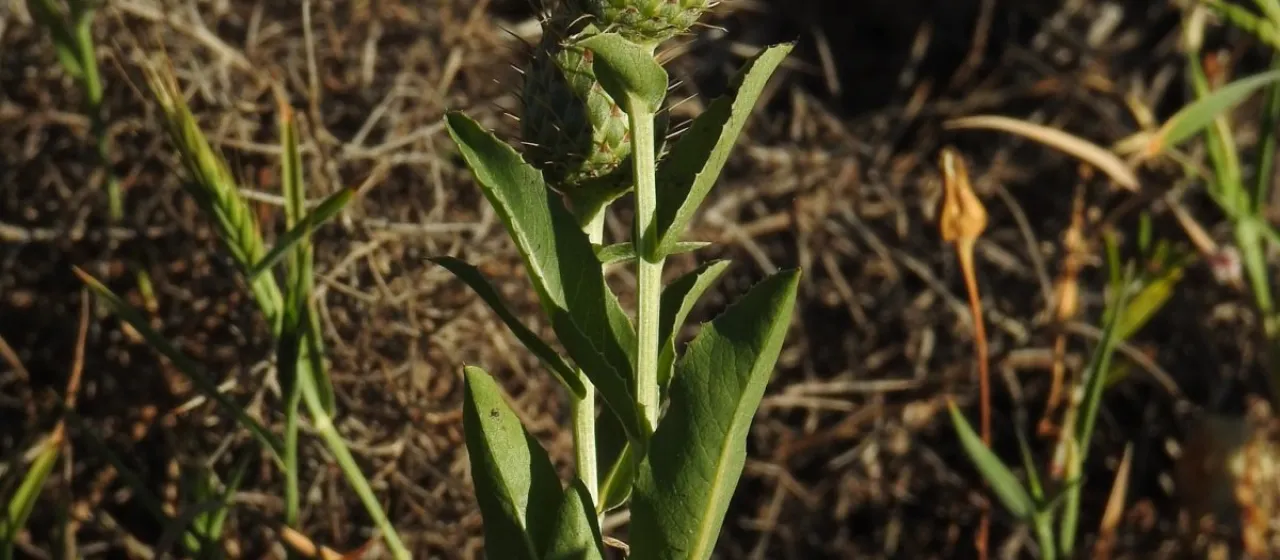
Description
Klasea flavescens is a perennial herbaceous plant belonging to the Asteraceae family. Often recognized for its distinctive yellow flowering heads, this species was historically categorized under the genus Serratula. It is an ecologically resilient plant, specifically adapted to survive in challenging environments where soil quality may be suboptimal for traditional crops.
Originating from the Mediterranean basin and parts of Southern Europe, the plant is well-accustomed to dry, calcareous, and rocky habitats. Its geographic distribution makes it a subject of interest for agricultural land restoration, as it can thrive in areas where conventional grass species struggle due to persistent water scarcity or poor soil structure.
Botanically, Klasea flavescens features a robust taproot system that facilitates deep water absorption, supporting its survival during prolonged droughts. The plant typically reaches heights of 40–80 cm, with finely dissected leaves that exhibit pubescence, acting as a defense mechanism against excessive transpiration. Its growth cycle is characterized by slow establishment in the first season, followed by vigorous perennial development.
Regarding agricultural requirements, this species favors well-drained, neutral to alkaline soils and full sun exposure. In terms of agronomy, the focus should be on creating a favorable germination environment during the early stages. While it is inherently hardy, preventing early competition from weeds is essential to allow the crop to establish its dominant root network. Once matured, it requires minimal to no supplemental fertilization or irrigation.
The primary agricultural applications for this species include its use in dryland forage production and soil erosion mitigation on slopes. Its ecological value is further enhanced by its status as a reliable nectar source, supporting local pollinator populations. While the plant is generally robust, growers should monitor for common issues such as powdery mildew in humid microclimates and typical insect pests like aphids that may target the flowering stems during the growing season.