
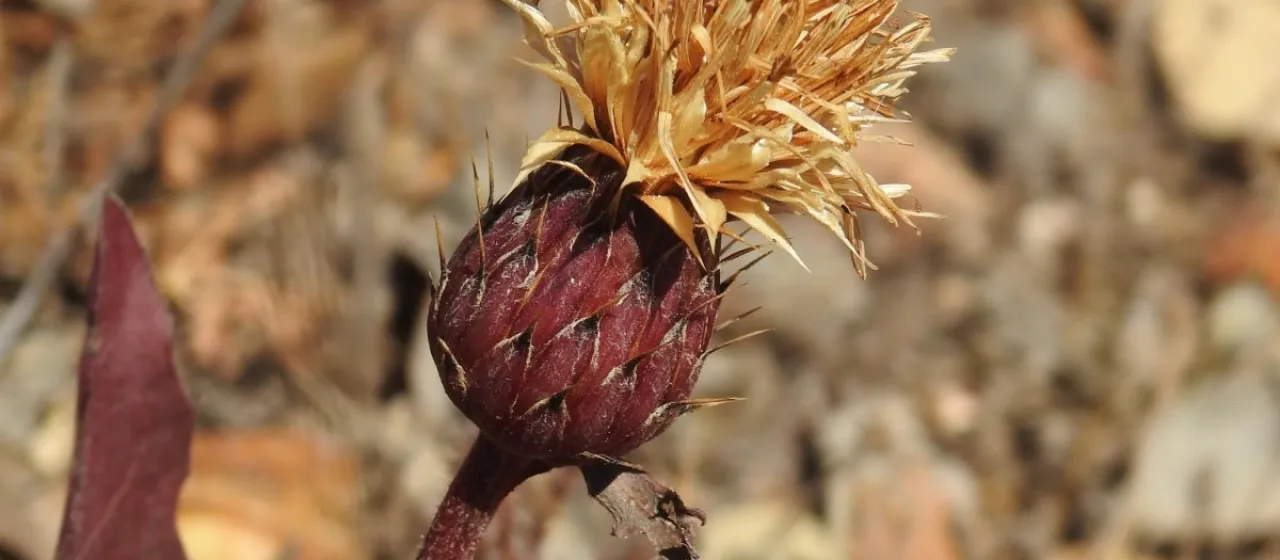
Description
Klasea integrifolia is a perennial herbaceous plant belonging to the Asteraceae family. Previously classified under the genus Serratula, it has been redefined in modern botany as a distinct species within the Klasea genus. This plant is increasingly recognized for its ecological resilience and chemical composition, which hold significant interest for both botanical research and industrial application.
The native range of the species extends across the steppe and forest-steppe zones of Eurasia. It typically thrives in arid environments, rocky outcrops, and open meadows. In agricultural terms, it is studied for its ability to produce biomass in challenging soil conditions where common commercial crops often fail, making it a sustainable candidate for specialized agriculture.
Botanically, the plant is characterized by an erect stem, typically 40–80 cm tall, and smooth, linear-lanceolate leaves. The root system is deep and taproot-like, providing high resistance to drought and enabling the plant to access nutrients in deeper soil horizons. Its flowering heads feature dense, purple-hued florets that bloom during the height of the summer season.
The cultivation of Klasea integrifolia requires a well-drained, sunny environment with neutral to slightly alkaline soil. It is highly drought-tolerant once established and does not require frequent irrigation. Field maintenance is primarily focused on weed control during the establishment phase, as the young plants are sensitive to competition from fast-growing weeds.
The primary agricultural and commercial uses for this crop include:
- Extraction of bioactive compounds, particularly ecdysteroids, for the pharmaceutical industry.
- Utilization as a sustainable fodder resource for livestock in semi-arid regions.
- Application in landscape architecture for drought-resistant and pollinator-friendly garden beds.
Common pests include various coleoptera that feed on the foliage and aphids that may infest the flower buds. Disease management is focused on preventing fungal infections such as powdery mildew, which can occur under conditions of high humidity or poor air circulation. Proper plant spacing and avoiding excessive irrigation are critical measures to ensure crop health and productivity.