
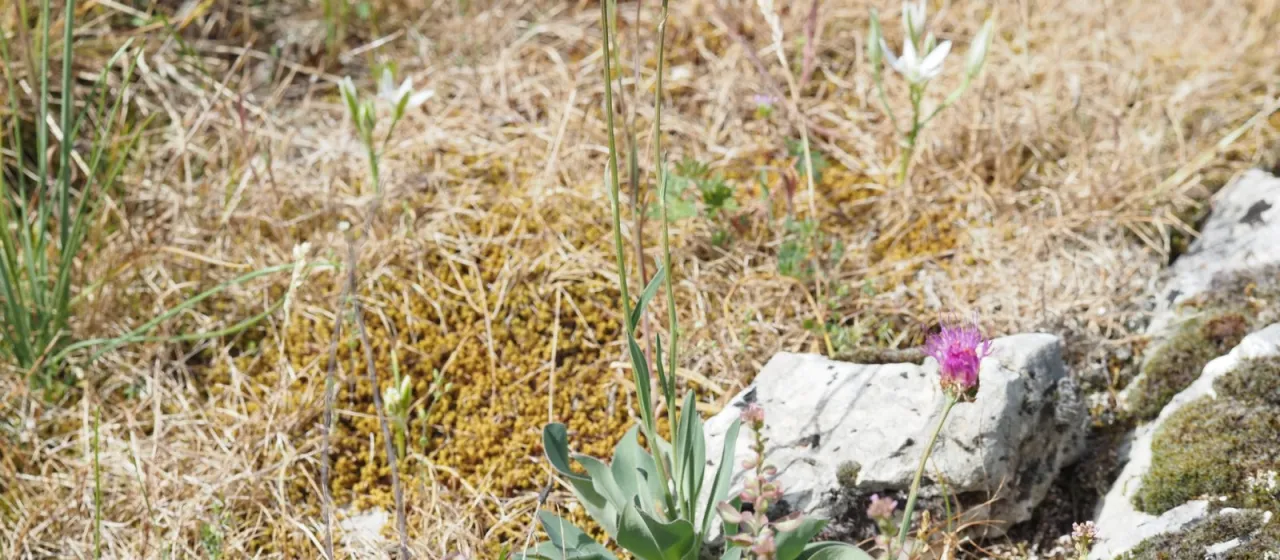
Description
Klasea nudicaulis is a perennial herbaceous plant belonging to the Asteraceae family. Formerly categorized under the genus Serratula, it has been reclassified to the genus Klasea based on molecular data. This species is gaining attention in agricultural studies for its resilience and its role in maintaining biodiversity within managed pastoral landscapes.
The plant originates from the Eurasian steppe and forest-steppe regions, demonstrating a strong adaptation to temperate climates with periodic dry spells. It is primarily found in open, sunny habitats, where it thrives on rocky or well-drained soils. Its natural distribution highlights its capability to survive in environments where water availability is a limiting factor for more demanding crops.
Botanically, Klasea nudicaulis features a deep root system that facilitates drought tolerance. The foliage is typically arranged in basal rosettes, while the stems are erect and sparsely branched. The plant produces distinctive flowering heads that attract pollinators, which is an essential aspect of its reproductive strategy and its contribution to the local ecosystem health.
Agricultural management requires careful soil selection, favoring neutral to slightly alkaline, well-drained soils. Essential cultivation practices include:
- Site preparation through mechanical weeding to reduce initial competition.
- Monitoring soil pH to ensure optimal nutrient uptake.
- Strategic timing of harvesting to maximize biomass quality before lignification.
The primary agricultural use of this species involves its utilization as fodder for livestock in rangelands, where it is valued for its nutritional profile. Like most plants in the Asteraceae family, it can be susceptible to fungal pathogens such as rust and mildew, especially during rainy seasons. Integrated pest management, focusing on biological control and proper crop rotation, is recommended to mitigate risks.