
Description
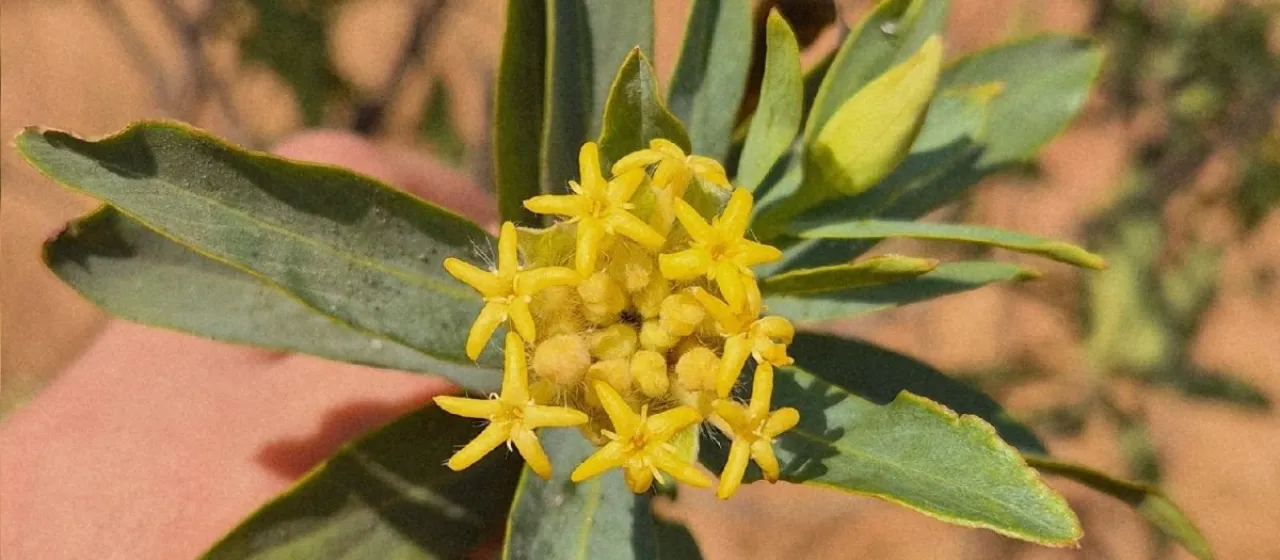
Lasiosiphon glaucus is a prominent perennial shrub or small tree within the Thymelaeaceae family. Recognized for its glaucous (bluish-grey) foliage, this species is a vital component of the flora in its native habitats, exhibiting consistent evergreen growth patterns throughout the year.
Originating from the tropical regions of Africa, this plant is widespread in Ethiopia, Kenya, and Tanzania. It typically occupies ecological niches ranging from upland forests to high-altitude savannas. Its ability to colonize diverse landscapes is largely due to its evolutionary adaptation to varying moisture levels and elevation ranges common in East African ecosystems.
Botanically, Lasiosiphon glaucus is characterized by its alternate leaves and dense, spherical flower heads. The flowers themselves are tubular, often emitting a distinct scent that facilitates pollination. The bark is notably fibrous, a trait that has been evolutionarily significant for the plant and economically useful for human populations residing within its range.
The agronomic requirements for this species focus on soil health and site selection. It thrives in well-drained, nutrient-rich soils with a slightly acidic to neutral pH. Proper cultivation necessitates adequate sunlight exposure, although the plant displays tolerance for partial shade during its initial growth phases. Maintaining consistent soil moisture, without saturation, is critical for healthy development.
Regarding its utility, the species holds significant value in ethnobotanical contexts. Extracts from the leaves and roots are utilized in traditional medicine, while the fibrous properties of the bark are harvested for cordage and weaving materials. These practical applications underscore its role as a multipurpose resource for local agricultural communities.
Pest management is an essential part of maintaining the health of Lasiosiphon glaucus. The plant is occasionally susceptible to fungal leaf spots in high-humidity environments and can be affected by sap-sucking insects. Implementing integrated pest management strategies, such as pruning for air circulation and avoiding overhead irrigation, significantly reduces the incidence of these problems.