
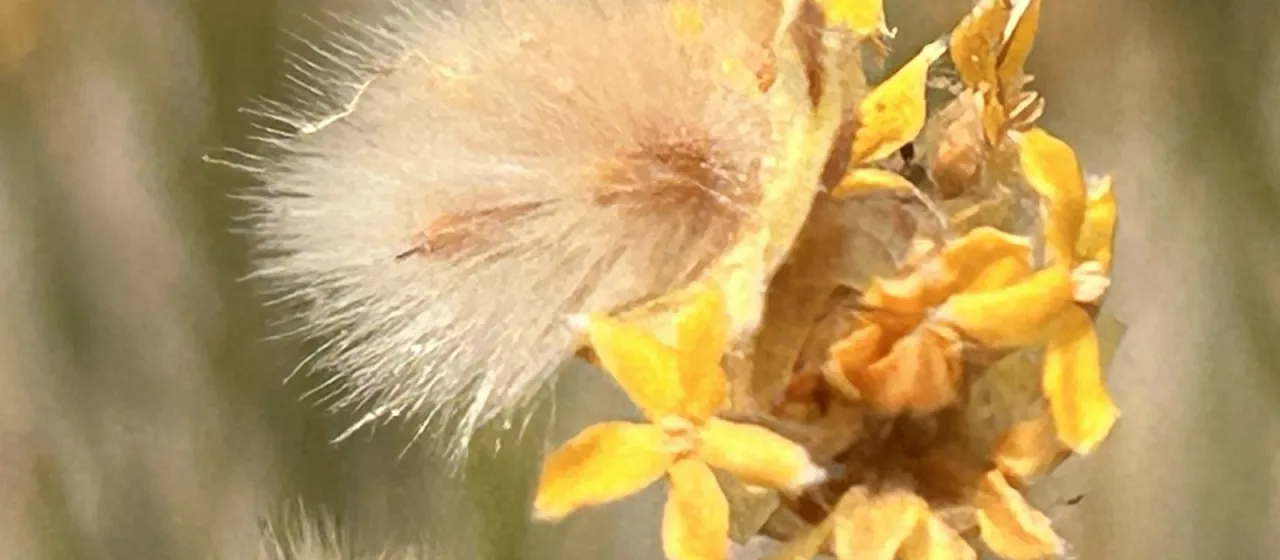
Description
Lasiosiphon polycephalus is a perennial shrub belonging to the Thymelaeaceae family. It is a highly specialized plant species, gaining attention in botanical studies for its unique evolutionary adaptations to arid and semi-arid environments typical of Southern Africa.
The plant originates from the dry regions of Africa, where it thrives in rocky grasslands and harsh landscapes. Its natural distribution is linked to specific soil types that provide excellent drainage, allowing the plant to withstand extended dry seasons and intense solar radiation, which are characteristic of its native habitat.
Botanically, the plant is characterized by a robust root system and specialized pubescent foliage that significantly reduces water loss. The inflorescences are dense, head-like structures that produce numerous small flowers, often serving as a critical nectar source for specialized insects in its native ecosystem.
Regarding climatic and soil requirements, this species demands full sun exposure and well-draining, sandy-loam soils. In an agricultural or nursery setting, the primary challenge is to prevent root rot, which occurs if the soil remains saturated for long periods. Minimal irrigation is recommended, focusing on the plant's natural dormancy cycles.
Economically, Lasiosiphon polycephalus is recognized for its potential in ethnobotanical research and as a hardy ornamental plant suitable for xeriscaping. Its high tolerance to heat makes it a candidate for sustainable agriculture in water-limited areas. Typical plant health issues include occasional infestations of aphids and sensitivity to fungal pathogens triggered by poor air circulation and excessive ambient humidity.