
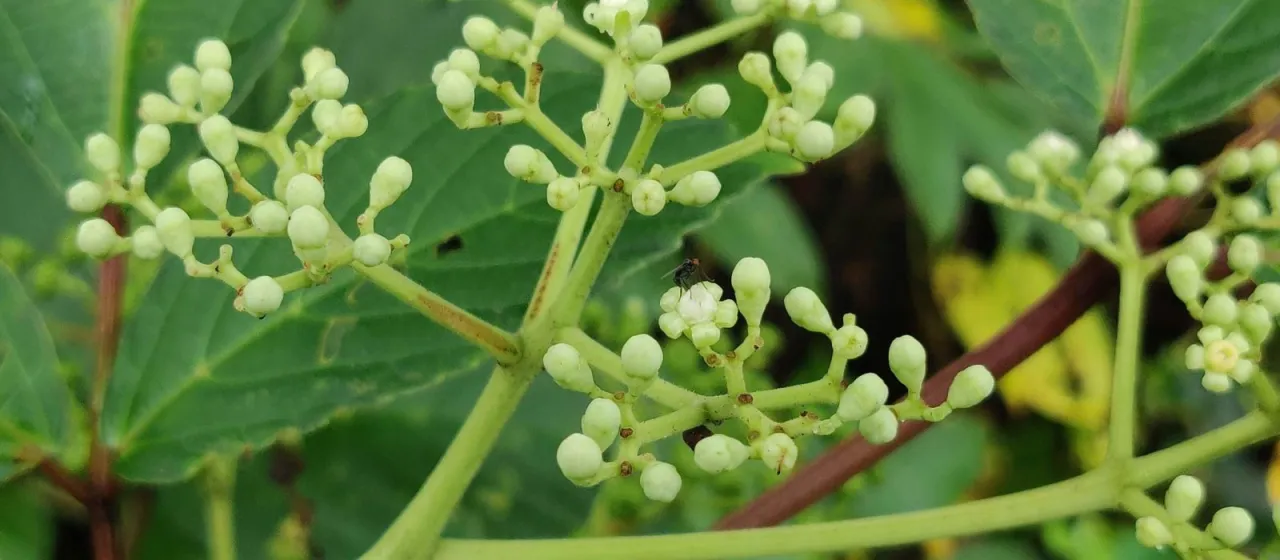
Description
Leea macrophylla is a perennial herb belonging to the Vitaceae family, notable for its large, tuberous root system. This biological structure serves as a reservoir for nutrients, enabling the plant to withstand seasonal variations in the tropical environments where it is natively found. Unlike its climbing relatives in the family, this species maintains a more compact, herbaceous growth habit.
The plant is native to parts of South and Southeast Asia, including India, Nepal, and Bangladesh. It typically inhabits moist, shaded areas such as forest floors, riverbanks, and woodland valleys. These natural ecological niches dictate the preferred conditions for cultivation, as the species relies on specific humidity levels and protection from intense, direct solar radiation to maintain its structural integrity.
Botanically, Leea macrophylla is distinguished by its impressive, large compound leaves and dense clusters of small, greenish-white or pale yellow flowers. The plant exhibits a cycle of vegetative growth followed by a dormant phase, during which the aerial parts may die back. Understanding this cycle is critical for growers to manage irrigation and soil maintenance properly throughout the year.
Cultivation requirements focus heavily on soil quality and site selection. The plant thrives in rich, well-draining soils with high organic content. A primary concern in its agrotechnics is the prevention of root rot, which is common if the soil remains waterlogged. Consequently, a well-structured drainage system is essential when growing the plant in field conditions or greenhouses to ensure optimal tuber health.
- Maintaining partial shade to prevent leaf scorching.
- Applying balanced organic fertilizers during the active growth period.
- Implementing integrated pest management for common tropical insect pests.
- Ensuring consistent moisture while allowing soil aeration.
In terms of economic and agricultural use, Leea macrophylla is highly valued for its medicinal properties, particularly in traditional healing systems where its roots are prepared as salves or infusions. Beyond medicine, the species is increasingly recognized for its potential in tropical horticulture, serving as a robust ornamental plant that provides lush green foliage in temperate-to-warm climates.