
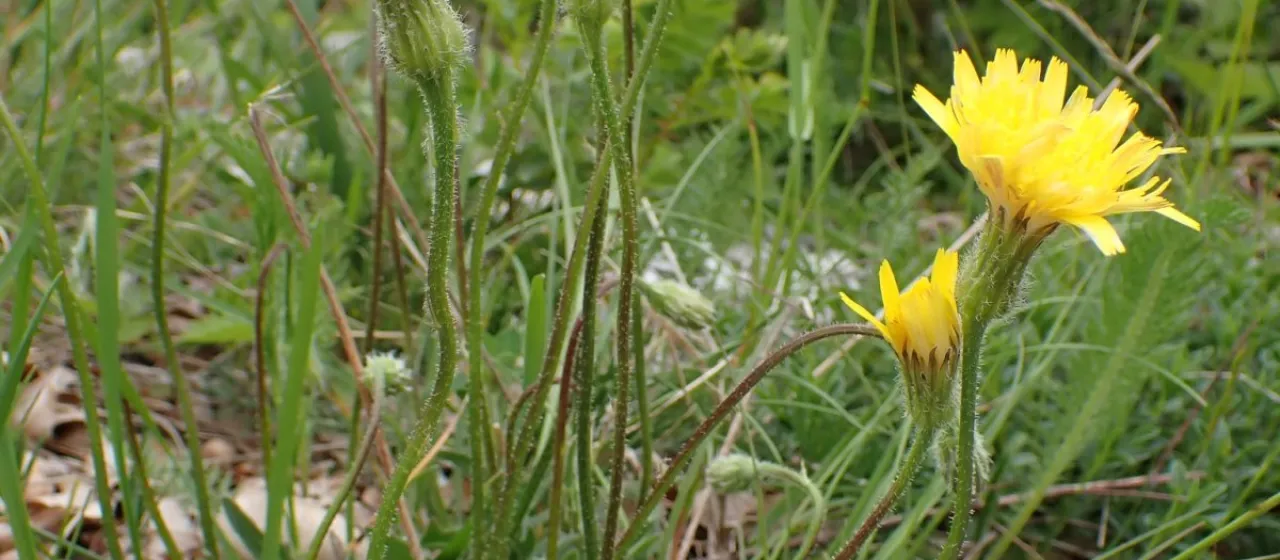
Description
Leontodon crispus, commonly referred to as the curly hawkbit, is a perennial herbaceous plant belonging to the Asteraceae family. In agricultural science, this species is recognized for its durability and presence within permanent pastures, contributing to the structural and nutritional diversity of grazing lands.
The plant originates from the Mediterranean region and parts of Central Europe and Asia. It is well-adapted to Mediterranean climates, thriving in dry, sunny environments and on stony or well-drained soils. Its resilience against environmental stress allows it to persist in areas where other forage species might struggle to survive.
Botanically, it is distinguished by a basal rosette of leaves with notably crisp or deeply lobed margins, which serves as a key identification feature. The inflorescences are solitary, bright yellow flower heads borne on leafless stems. Its deep taproot system ensures high water-use efficiency, enabling the plant to remain green even during peak summer heat.
Regarding agrotechnology, the species requires little intervention, as it is naturally adapted to its native habitats. It thrives in well-drained, neutral to slightly alkaline soils. Propagation is primarily through seed dispersal, which is facilitated by the wind, allowing for rapid colonization of fallow areas or less intensively managed pasture sections.
- Primary use: Forage for small ruminants.
- Agricultural role: Soil stabilization and biodiversity enhancement.
- Pest management: Monitoring for aphids during the budding phase.
- Disease control: Improving air circulation to prevent powdery mildew.
The plant is highly valued for its moderate nutritional quality in early growth stages. However, it can be susceptible to common Asteraceae pests such as aphids and various fungal pathogens. Maintaining adequate grazing intensity is the most effective method for managing the density of this plant in a meadow ecosystem.