
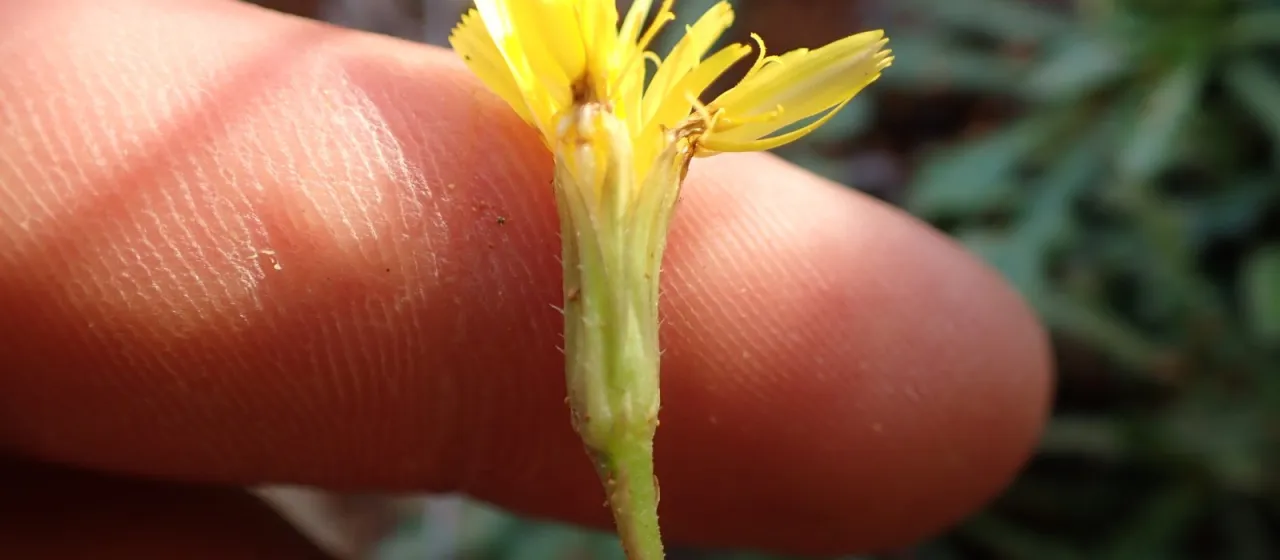
Description
Hairy hawkbit (Leontodon hirtus) is a herbaceous perennial plant belonging to the Asteraceae family. In agricultural settings, it is often recognized as a natural component of grasslands, valued for its hardiness and ability to thrive in various soil conditions, contributing to the overall biomass of pastures.
The origin of this species is linked to the European and Mediterranean regions, where it naturally populates meadows, pastures, and roadsides. Its wide environmental tolerance allows it to adapt to different climatic zones, provided there is sufficient sunlight and reasonable soil drainage, making it a reliable element of diverse forage mixtures.
Botanically, Leontodon hirtus is distinguished by its basal rosette of hairy leaves, which provides its common name. The plant produces slender, leafless stalks ending in yellow flower heads. Its strong taproot system is a key evolutionary advantage, allowing the plant to reach deep soil nutrients and survive periods of moderate drought during the growing season.
Agronomic requirements are relatively low compared to high-intensity crops. It prefers neutral to slightly acidic soils and benefits from well-drained loamy textures. When managed as part of a pasture, minimal intervention is required; however, periodic soil nutrient testing and light fertilization can improve foliage density and overall yield quality.
Agricultural utility is primarily focused on livestock forage and land coverage.
- High resilience to grazing pressure.
- Significant early-season biomass production.
- Ability to fix nitrogen levels indirectly via healthy root-microbe associations.
Common plant health issues include powdery mildew, typically appearing in humid conditions with poor air circulation. Pests such as aphids and leaf-eating beetles can occasionally infest the foliage. To mitigate these, proper pasture rotation and mechanical mowing are recommended to ensure plant vigor and prevent the proliferation of pests and diseases.