
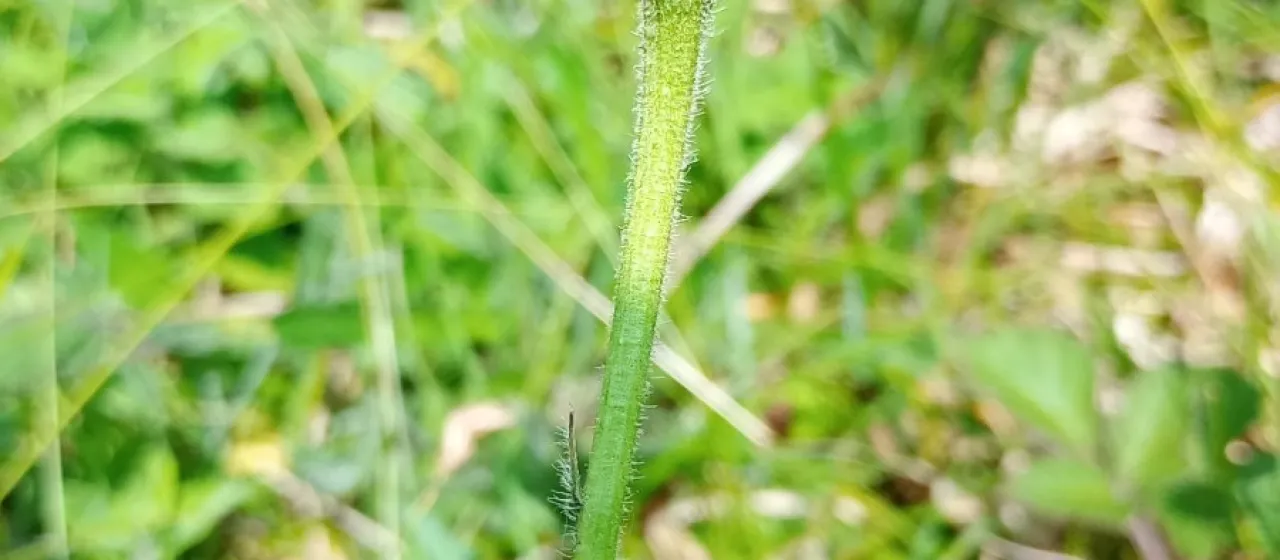
Description
Rough hawkbit (lat. Leontodon hispidus) is a perennial herbaceous plant belonging to the Asteraceae family. Known for its adaptability, this species is commonly found in meadows, pastures, and grasslands throughout Europe and Western Asia, where it serves as a functional component of the local flora.
The origin of the species is linked to the temperate zones of Eurasia. It is well-distributed in diverse habitats ranging from moist lowland meadows to drier, rocky slopes. In agricultural terms, it is considered a beneficial herb within permanent pasture mixtures, contributing to the overall botanical diversity and nutritional quality of the forage base.
Botanically, the rough hawkbit is characterized by a basal rosette of leaves that are covered in stiff, coarse hairs, which distinguish it from other similar yellow-flowered composites. It produces a solitary, leafless flowering stem with a single bright yellow capitulum. Its deep taproot system is a key feature, allowing the plant to withstand significant dry spells during the summer months.
Regarding cultivation requirements, the species thrives in well-drained loamy or sandy soils. It shows a preference for neutral to slightly acidic soil conditions and can tolerate a wide range of light exposure. Proper management of pastures, such as avoiding overgrazing, is essential to maintain a healthy population of the plant, as it relies on seed dispersal and rosette stability to persist in the field.
In terms of economic use, rough hawkbit is primarily valued as part of the grazing forage for livestock. While it is rarely grown as a monoculture crop, its inclusion in pasture swards is generally encouraged by agronomists to improve the mineral composition of animal feed. It is relatively resistant to common pests, though moisture-related fungal diseases may occur in poorly drained conditions.
- Excellent drought tolerance due to deep taproots.
- Valuable component for diverse grazing pastures.
- High mineral content beneficial for livestock.
- Naturally adapted to sustainable grassland management.