Lemon-scented tea tree
Leptospermum liversidgei R. T. Baker & H. G. Sm.
Description
The lemon-scented tea tree (Leptospermum liversidgei) is a distinctive evergreen shrub belonging to the Myrtaceae family. Renowned for its aromatic foliage, the leaves release a strong, pleasant lemon fragrance when crushed, which has made it a favored choice among botanical enthusiasts and garden designers.
Native to the eastern coastal regions of Australia, specifically New South Wales and Queensland, this species thrives in damp, sandy soil conditions often found near wetlands or coastal forests. Its natural habitat is the primary indicator for its cultivation requirements in gardens or commercial settings.
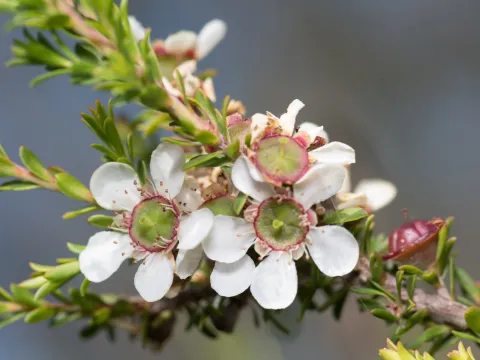
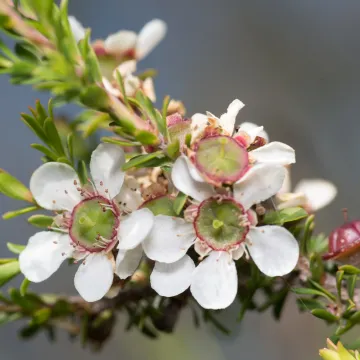
Botanically, this shrub can reach heights of 1 to 3 meters, characterized by its fine, needle-like leaves and attractive white or pinkish blossoms. The dense branching habit makes it an excellent candidate for hedging or screening, provided it receives sufficient light to maintain its compact form.
Successful cultivation requires a sunny position and well-drained, acidic soil. While it appreciates moisture, it is crucial to avoid waterlogging, which can lead to root rot. Regular pruning helps in maintaining the desired shape and encourages denser flowering throughout the growing season.
In terms of economic use, the plant is primarily cultivated for landscaping and ornamental purposes. Furthermore, due to the high concentration of essential oils in its foliage, it is sometimes utilized in the production of natural fragrances and antimicrobial agents, following the general trend of utilizing Myrtaceae species.
- Excellent choice for coastal gardens and hedges.
- Thrives in well-drained, slightly acidic soil.
- Requires protection from severe frost and heavy winds.
- Relatively pest-free but susceptible to scale insects if stressed.
Photo gallery