Leptospermum macrocarpum
Leptospermum macrocarpum (Maiden & Betche) Joy Thomps.
Description
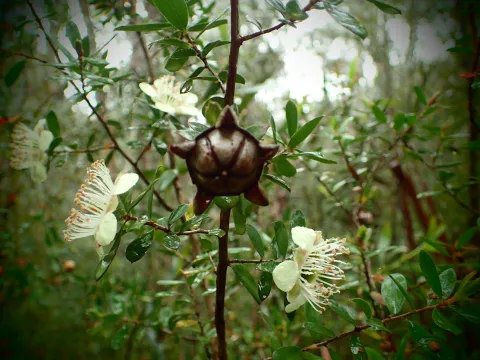
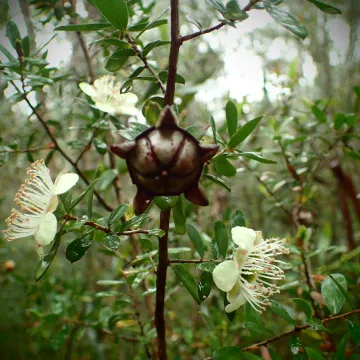
Leptospermum macrocarpum, commonly known as the large-fruited tea tree, is a stunning evergreen shrub belonging to the Myrtaceae family. It is highly regarded in horticulture for its distinctively large, showy flowers and attractive foliage, making it a standout choice for gardens.
The plant is native to the coastal and mountain regions of New South Wales, Australia. It typically thrives in rocky or sandy, well-drained soils, reflecting its evolutionary adaptation to the nutrient-poor, porous landscapes characteristic of its natural Australian habitat.
Botanically, the shrub can reach heights of up to 3 meters. The most prominent feature is its flowers, which are the largest within the Leptospermum genus. These flowers typically bloom in shades of white or pink, set against stiff, leathery, elliptical leaves that provide a textural contrast throughout the year.
Cultivation requirements focus heavily on soil structure and site selection. This species requires a sunny position and excellent drainage; it is particularly susceptible to root rot if grown in heavy or waterlogged soils. It also prefers phosphorus-sensitive fertilizers, common among many Australian native plants.
In terms of usage, this plant is primarily used as an ornamental specimen in landscaping. Its ability to tolerate wind and exposed positions makes it suitable for coastal gardens, provided there is enough protection from extreme frost. It is often maintained as a structural shrub in larger landscape designs.
- Requires full sun for optimal flowering performance.
- Requires free-draining sandy or rocky soil types.
- Avoid high-phosphorus fertilizers to prevent plant toxicity.
- Regular pruning after flowering maintains a compact, dense habit.
Photo gallery