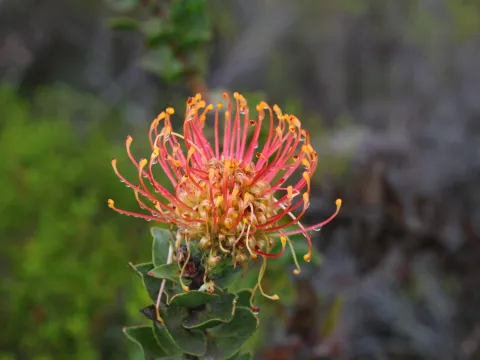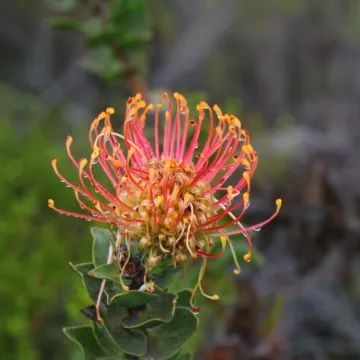

Leucospermum
Leucospermum cordifolium x Leucospermum glabrum
Description
Leucospermum is a genus of evergreen shrubs belonging to the Proteaceae family. As a commercial crop, the hybrid of Leucospermum cordifolium and Leucospermum glabrum is highly sought after in the international cut flower market. Known for its distinct pincushion-like blooms, this plant serves as a premium architectural element in floral design and large-scale decorative arrangements.
The plant originates from the Cape region of South Africa, where it thrives in fynbos vegetation zones. In modern agricultural practice, it is cultivated in regions with a Mediterranean climate, such as South Africa, parts of California, Australia, and Israel. These plants are heliophilic and require high light intensity to ensure consistent, high-quality flower production throughout the season.
Botanically, the plant is characterized by sturdy, leathery leaves and complex inflorescences. The "pincushion" effect is created by long, colorful styles extending from the floral head. The shrub is naturally adapted to fire-prone environments, possessing a root system that requires exceptional aeration, which dictates the strict requirements for soil structure and substrate preparation in greenhouse settings.
Cultivation success relies heavily on substrate management. Growers must provide well-draining, acidic, nutrient-poor soil. Excessive irrigation or fertilization is detrimental, as the species is sensitive to high phosphorus levels and prone to root pathogens. Pruning is a critical agrotechnical practice, as it encourages the formation of new flowering stems and prevents the plant from becoming woody and unproductive.
Key maintenance and plant protection measures:
- Strict avoidance of waterlogging to prevent Phytophthora root rot.
- Application of specialized low-phosphorus fertilizers to ensure healthy growth.
- Implementation of annual pruning cycles to maintain plant shape and flowering density.
- Monitoring for common pests, including mealybugs and spider mites, which can thrive in warm environments.
Photo gallery