
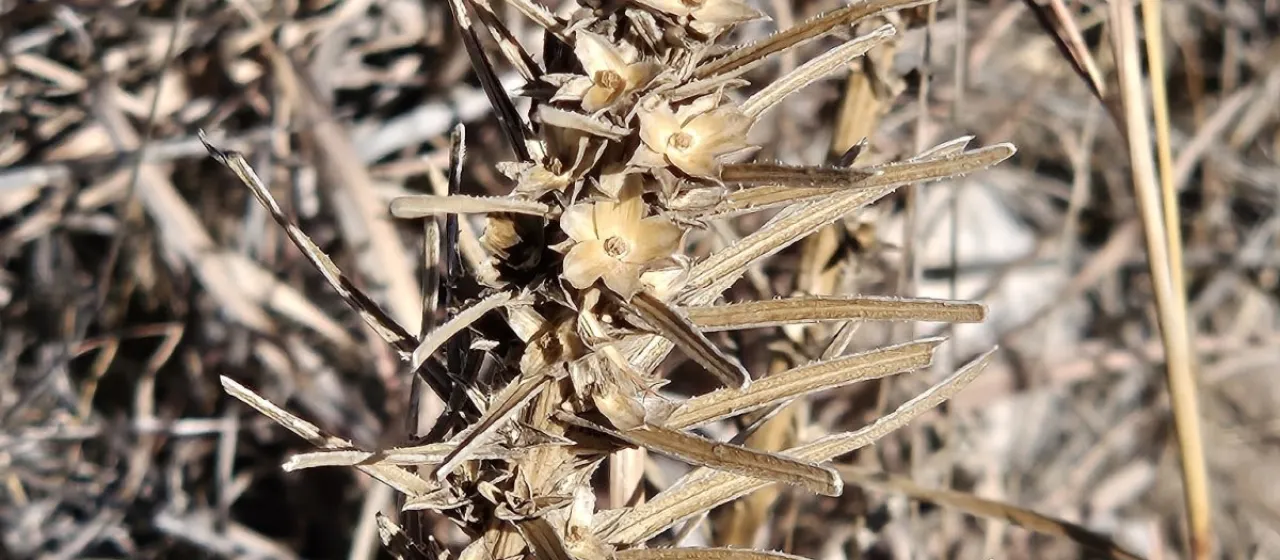
Description
Dotted blazing star (Liatris punctata) is a perennial herbaceous plant belonging to the Asteraceae family. Known for its remarkable resilience, this species has evolved to thrive in harsh environmental conditions, making it an excellent candidate for restoration ecology and specialized low-maintenance agricultural projects.
The plant originates from the Great Plains and prairies of North America. Its natural range encompasses regions characterized by extreme temperature fluctuations and limited annual precipitation, where it has developed sophisticated survival mechanisms. It is widely recognized for its ability to dominate in dry, nutrient-poor grassland habitats.
Botanically, Liatris punctata is distinguished by an exceptionally deep taproot system, which can grow several meters long, allowing it to reach deep soil moisture. The stems are upright, adorned with narrow, linear leaves covered in glandular dots. During the late summer, it produces striking spikes of purple-magenta flowers that are highly valued for their ornamental and ecological function.
Agricultural success depends on providing well-drained, sandy, or rocky soil conditions. The plant is highly intolerant of waterlogged, heavy soils, which often lead to root rot. It requires full sun exposure and generally performs best in soil with a neutral to slightly alkaline pH, mirroring the conditions of its native prairie habitat.
The plant serves multiple purposes, including its role as a premier honey plant for local apiculture and its utility in stabilizing soil against wind and water erosion. Beyond its ecological benefits, it is increasingly being studied for its medicinal properties and remains a popular choice for sustainable xeriscaping projects where irrigation is limited.
- Exceptional drought tolerance via deep taproot.
- Strong winter hardiness in continental climates.
- High nectar production for wild and honey bees.
- Minimal maintenance once established in the field.
While generally robust, the plant can be susceptible to fungal issues such as leaf spot or root rot if drainage is insufficient. Insect pests, including certain beetles and lepidopteran larvae, may occasionally feed on the foliage or floral spikes, though populations are rarely large enough to require intensive chemical control measures in typical cultivation settings.