Bell-leaved sea-lavender
Limonium bellidifolium (Gouan) Dumort.
Description
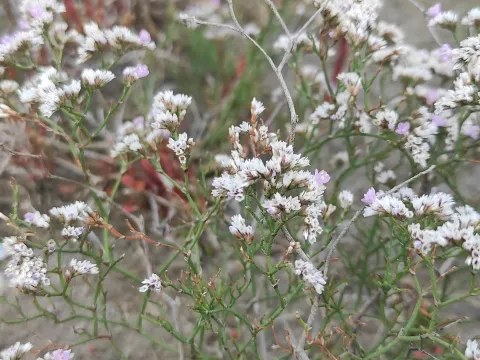
Bell-leaved sea-lavender (lat. Limonium bellidifolium) is a perennial herbaceous plant belonging to the Plumbaginaceae family. This species is widely recognized in professional horticulture for its tolerance to saline environments and its ornamental value, particularly as a popular choice for dried flower arrangements.
Originating from the coastal regions of Europe and the Mediterranean, this plant is naturally adapted to harsh seaside conditions. Its distribution area is largely defined by its preference for well-drained, sandy soils and its ability to withstand exposure to salt spray and high winds, making it a robust candidate for coastal landscape restoration.
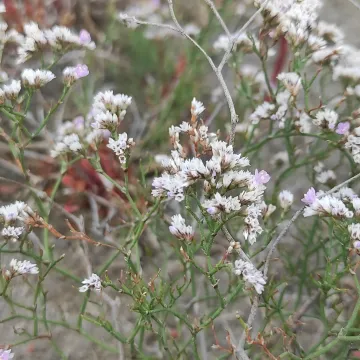
Botanically, the plant features a basal rosette of coriaceous leaves from which tall, branching inflorescences emerge. These flowers create a delicate, lace-like appearance. Its deep taproot system allows the plant to access moisture and nutrients that are unavailable to more sensitive species, contributing to its status as a resilient xerophyte.
The agronomic requirements for Limonium bellidifolium focus primarily on soil drainage and sunlight. The plant thrives in full sun and requires a substrate that prevents water stagnation. During the vegetative stage, it is crucial to avoid over-fertilization, as this can lead to excessive foliage growth at the expense of floral development and general hardiness.
Regarding хозяйственное (agricultural/commercial) usage, the plant is primarily harvested for the florist industry, as its stems are durable and retain their structure well when dried. In garden settings, it is valued for low-maintenance landscaping and rock gardens. Potential pest threats include common aphids, and fungal infections may occur if air circulation is poor, necessitating adequate spacing between plants during the planting process.
Photo gallery