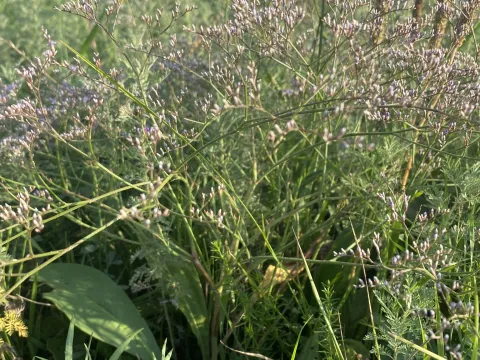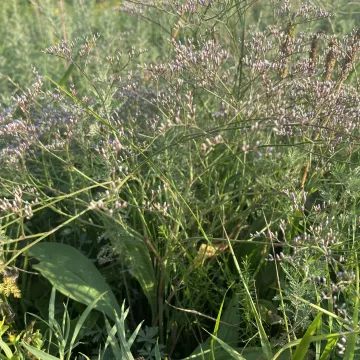
Limonium gerberi
Limonium gerberi Soldano
Description
Limonium gerberi Soldano is a perennial herbaceous plant belonging to the Plumbaginaceae family. Known for its aesthetic appeal and structural durability, this species is gaining attention as a specialty crop, particularly in the production of high-quality dried floral materials.
The plant originates from arid and semi-arid regions of the Mediterranean. It is naturally adapted to survive in harsh environmental conditions, including poor, saline, or rocky soils. Its evolutionary development has favored high tolerance to heat and intense solar radiation, which are defining factors for its successful cultivation.
Botanically, Limonium gerberi is characterized by a basal rosette of coriaceous leaves and a branched, rigid inflorescence stalk. The inflorescence consists of numerous small flowers protected by persistent calyces, which retain their color and shape long after the plant has reached physiological maturity.
For optimal growth, the crop requires full sun exposure and well-drained, sandy, or gritty soil substrates. It is essential to implement an irrigation strategy that avoids constant soil saturation, as the root system is highly sensitive to hypoxia and fungal pathogens associated with waterlogged conditions.
- Requires high levels of direct sunlight
- Drought-tolerant once established
- Preferential growth in alkaline to neutral pH soils
- Minimal nutrient requirements compared to standard crops
In terms of agricultural and commercial use, Limonium gerberi is primarily valued as a cut flower and for dried arrangements. Disease management is focused on preventing powdery mildew and root rot. Pest monitoring should prioritize aphids and spider mites, which can proliferate rapidly in warm, protected growing environments.
Photo gallery