
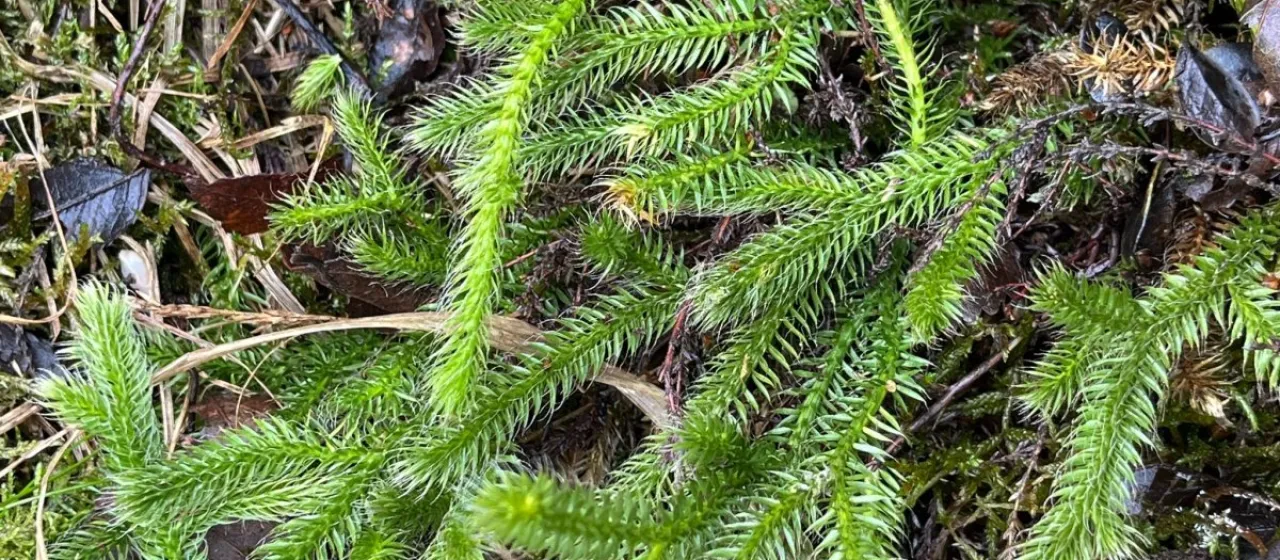
Description
Common clubmoss (Lycopodium clavatum) is a perennial, evergreen, spore-bearing vascular plant belonging to the Lycopodiaceae family. It is characterized by its trailing stems that creep along the forest floor, reaching several meters in length, with dense, scale-like leaves that give it a moss-like appearance.
The distribution of this species spans the temperate regions of the Northern Hemisphere, typically inhabiting coniferous forests and heathlands. It thrives in nutrient-poor, acidic soils and is highly sensitive to changes in its microclimate, making it a bioindicator of healthy forest ecosystems rather than a viable candidate for standard agricultural cultivation.
Botanically, the plant reproduces via spores produced in yellow, club-shaped strobili, which appear on erect peduncles. The development process is exceptionally slow, as the gametophyte phase is dependent on specific mycorrhizal fungi to germinate, often requiring several years before a mature plant can successfully reproduce or colonize new areas.
Regarding cultivation, Lycopodium clavatum cannot be farmed using conventional agronomic techniques due to its specific symbiotic soil requirements. Attempts to domesticate the plant have largely failed because it requires precise environmental conditions and minimal competition from fast-growing species, making wild harvesting the only source of commercial supply.
In terms of хозяйственное (industrial and economic) use, the plant is primarily harvested for its spores, known commercially as lycopodium powder. This fine, hydrophobic dust has significant historical and practical applications:
- as a dusting powder in pharmacy and medicine;
- as a release agent in metal casting to prevent adhesion;
- in specialized pyrotechnics for its rapid combustion properties.